Cottage cheese is the breakout protein-of-the-decade story. Once parked in the dairy aisle as a diet food from the 1980s, it has now become a viral high-protein staple thanks to its 28 grams of protein per cup, low cost, and zero prep.
We cover why cottage cheese is having a moment, six high-protein bowl combos (sweet and savory), nutrition for each, and tips for anyone who hated the texture as a kid.
Cottage Cheese Nutrition (Per 1 Cup)
| Type | Calories | Protein | Fat | Carbs |
|---|---|---|---|---|
| Nonfat / fat-free | ~120 | 26 g | 0 g | 10 g |
| Low-fat (1 to 2%) | ~180 | 28 g | 5 g | 8 g |
| Whole milk (4%) | ~220 | 25 g | 10 g | 6 g |
Swipe to see more →
About 80% of cottage cheese's protein is casein, which digests slowly and supports muscle protein synthesis over 4 to 6 hours. That makes it especially useful as a late-night snack before sleep.
For full per-meal protein math, see our how to hit 30g protein without a shake guide. For protein quality scoring, the protein quality score explained post covers casein's DIAAS rating.
Cottage Cheese vs Greek Yogurt
| Metric | Cottage Cheese (1 cup low-fat) | Greek Yogurt (1 cup nonfat) |
|---|---|---|
| Protein | 28 g | 23 g |
| Calories | 180 | 130 |
| Sugar (natural) | 8 g | 9 g |
| Calcium | 170 mg | 230 mg |
| Sodium | ~700 mg | ~85 mg |
| Probiotics | usually none | live cultures |
| Cost per cup | ~$1.20 | ~$1.50 |
Swipe to see more →
Tradeoff: cottage cheese wins on protein density and cost. Greek yogurt wins on calcium, probiotics, and sodium load. Use both in rotation.
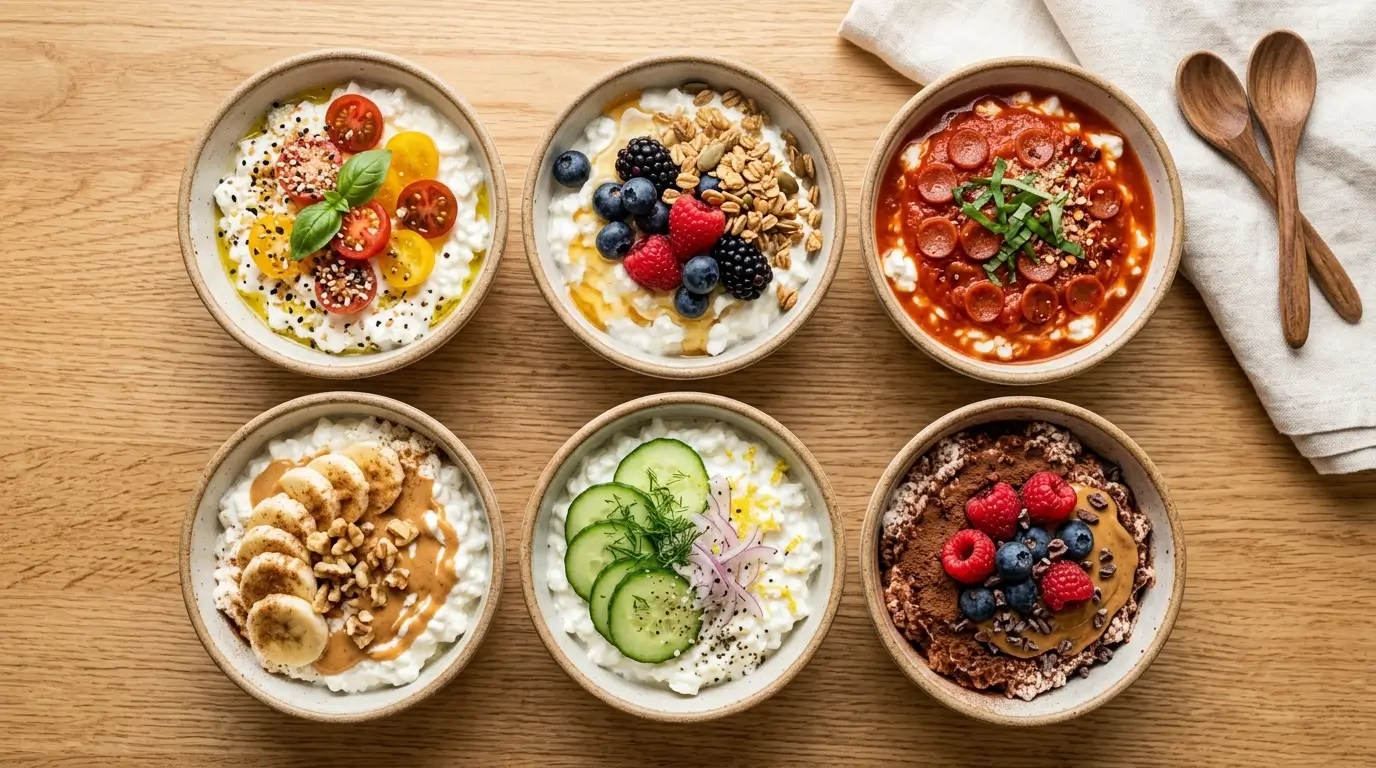
The 6 Bowls
Bowl 1: Savory Tomato Crunch (TikTok viral)
Ingredients:
- 1 cup low-fat cottage cheese
- 1/2 cup cherry tomatoes, halved
- 1 tbsp olive oil
- 1 tsp everything bagel seasoning
- Cracked pepper, fresh basil
Nutrition: 28 g protein, ~280 cal, 12 g fat, 11 g carbs
This is the bowl that took over TikTok in 2024 to 2025. The tomato + olive oil + everything seasoning combo turns cottage cheese into something closer to a deconstructed Mediterranean dip.
Bowl 2: Sweet Berry Bowl
Ingredients:
- 1 cup low-fat cottage cheese
- 1/2 cup mixed berries (strawberry, blueberry, raspberry)
- 1 tbsp honey or maple syrup
- 1 tbsp chia seeds
- 2 tbsp granola
Nutrition: 32 g protein, ~360 cal, 7 g fat, 42 g carbs
A solid breakfast or post-workout option. Chia seeds add 5 g of fiber and 3 g of plant protein.
Bowl 3: Pizza Bowl (savory, low-carb)
Ingredients:
- 1 cup low-fat cottage cheese
- 1/4 cup low-sugar marinara sauce
- 1 oz turkey pepperoni or shredded mozzarella
- Italian seasoning, red pepper flakes
Nutrition: 36 g protein, ~310 cal, 10 g fat, 12 g carbs
Pizza-flavored, no crust, hits 36 g protein. Heat in microwave for 60 seconds for a hot version.
Bowl 4: Peanut Butter Banana Bowl
Ingredients:
- 1 cup low-fat cottage cheese
- 1 medium banana, sliced
- 2 tbsp natural peanut butter
- 1 tsp cinnamon
- Drizzle of honey
Nutrition: 36 g protein, ~480 cal, 18 g fat, 42 g carbs
Higher-calorie option with healthy fats. Works as a meal replacement or solid post-workout option.
Bowl 5: Cucumber Dill (Mediterranean Style)
Ingredients:
- 1 cup low-fat cottage cheese
- 1/2 cucumber, diced
- 2 tbsp red onion, finely chopped
- 1 tsp fresh dill
- Squeeze of lemon, olive oil, salt
Nutrition: 30 g protein, ~250 cal, 8 g fat, 12 g carbs
Refreshing summer bowl. Pairs well with pita chips or wheat crackers (add 5 to 8 g protein from the dipper).
Bowl 6: Chocolate Cottage Cheese (Dessert)
Ingredients:
- 1 cup low-fat cottage cheese
- 1 tbsp unsweetened cocoa powder
- 1 tbsp peanut butter
- 1 tbsp maple syrup or 1 packet stevia
- 1/4 cup berries
Nutrition: 33 g protein, ~340 cal, 10 g fat, 22 g carbs
Blend for a smooth pudding-like texture. The cocoa + nut butter combo masks any cottage cheese tang completely.
Tips for Texture Haters
If you grew up disliking cottage cheese, the texture is usually the issue. Three fixes:
- Blend it smooth. A 30-second blender pulse turns cottage cheese into a thick, ricotta-like cream. Use it as a yogurt replacement.
- Drain excess liquid. Pour off the whey water that pools at the top of the tub before serving.
- Try whole-milk (4%). Lower-fat versions can taste chalky; the 4% version has a richer, less curd-y texture.
Brand recommendations that score well on texture and ingredient quality:
- Good Culture (live probiotics, no fillers)
- Daisy (3-ingredient label, widely available)
- Kalona SuperNatural (whole-fat, grass-fed, premium price)
- Trader Joe's (good budget option)
When to Eat Cottage Cheese
- Breakfast: ~30 g protein in 5 minutes (Bowl 2 or 4)
- Lunch: paired with veggies and a slice of bread (Bowl 5)
- Pre-workout (1 to 2 hr before): 1/2 cup with fruit for slow-release fuel
- Post-workout: pair with fast carbs (Bowl 2 or 4)
- Late night: classic use case. Casein digests slowly, supporting overnight muscle protein synthesis.
For overall daily protein math and meal-spacing, see how to calculate your daily protein intake.
Sodium Watch
Cottage cheese is high in sodium, about 700 mg per cup. If you are on a sodium-restricted diet (high blood pressure, kidney concerns), look for:
- No-salt-added cottage cheese (Friendship, Hood, Kalona)
- Whipped cottage cheese (often slightly lower sodium)
- Lighter portion (1/2 cup = 350 mg sodium)
For overall daily sodium guidance, see our electrolyte drinks compared post.
Sources & References
- USDA FoodData Central. Cottage cheese nutrition values (full-fat, low-fat, nonfat)
- International Society of Sports Nutrition: Casein and Sleep. Pre-sleep casein research
- Harvard T.H. Chan School: The Nutrition Source. Cottage cheese nutrition profile
- American Heart Association: Sodium. Sodium intake guidance