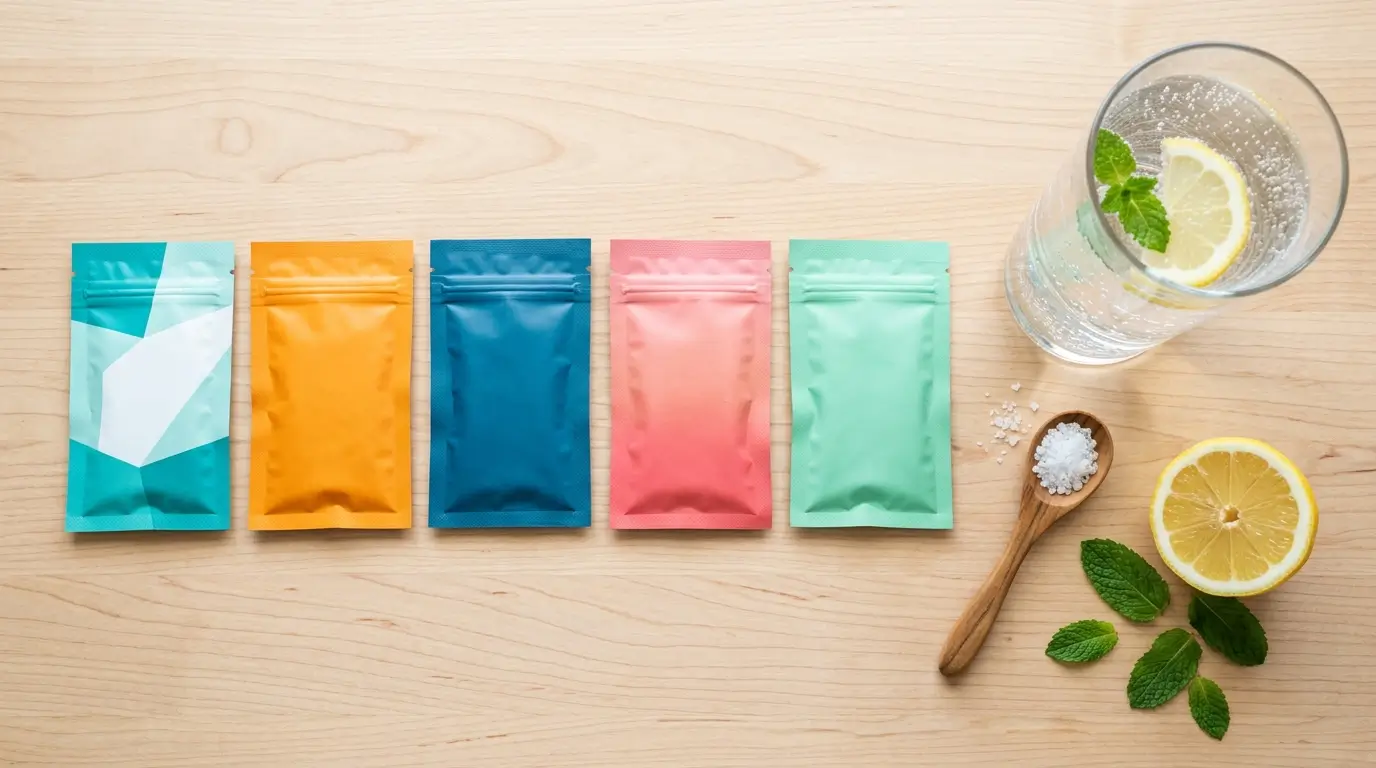
Electrolyte drinks have moved from niche athletic supplements to a mainstream wellness category, with LMNT, Liquid IV, Drip Drop, and Element filling shelves and TikTok feeds. The catch: their formulas are wildly different. Some have 3x the sodium of others; some are essentially flavored sugar water.
This guide compares the major brands head-to-head on sodium, potassium, magnesium, sugar, calories, and price, plus a 30-second DIY recipe that beats most of them on cost.
Side-by-Side Comparison (per packet/serving)
| Brand | Sodium | Potassium | Magnesium | Sugar | Calories | Price/serving |
|---|---|---|---|---|---|---|
| LMNT | 1000 mg | 200 mg | 60 mg | 0 g | 10 | ~$1.50 |
| Liquid IV (Hydration) | 510 mg | 380 mg | 0 mg | 11 g | 45 | ~$1.30 |
| Drip Drop | 330 mg | 185 mg | 39 mg | 7 g | 35 | ~$1.40 |
| Element | 1000 mg | 200 mg | 60 mg | 0 g | 5 | ~$1.40 |
| Nuun Sport | 300 mg | 150 mg | 25 mg | 1 g | 15 | ~$0.85 |
| Pedialyte AdvancedCare (12 oz) | 370 mg | 280 mg | 0 mg | 9 g | 35 | ~$2.00 |
| DIY recipe | ~600 mg | ~150 mg | 0 mg | 2 g | 8 | ~$0.05 |
Swipe to see more →
Numbers reflect manufacturer-published nutrition panels. Always check individual product labels because some lines (e.g., Liquid IV's "Sugar-Free" line) differ.
What Electrolytes Actually Do
The four electrolytes that matter for hydration:
- Sodium (Na+): the dominant electrolyte lost in sweat. The reason your body craves salt after a long workout.
- Potassium (K+): works with sodium for fluid balance and muscle contraction.
- Magnesium (Mg2+): muscle relaxation, energy metabolism, sleep quality.
- Chloride (Cl-): usually paired with sodium; rarely a limiting factor.
You lose roughly 500 to 1500 mg of sodium per liter of sweat, varying by fitness level and heat acclimation. A heavy sweater in the gym for an hour can easily lose 1500 to 3000 mg of sodium, which is why generic sports drinks (50 to 110 mg sodium per 8 oz) often under-deliver.
When You Actually Need an Electrolyte Drink
You probably don't need one for casual daily hydration. Plain water is fine for most adults, most of the time.
You probably do benefit from electrolytes when:
- Heavy exercise (>60 minutes, especially in heat)
- Hot weather or humidity even without exercise
- Low-carb / keto diet (insulin drop = sodium dump via kidneys)
- Hangovers (alcohol is a diuretic)
- Stomach illness (vomiting/diarrhea)
- Intermittent fasting (especially extended fasts)
- Frequent caffeine intake (coffee is a mild diuretic)
If you drink 4+ cups of coffee per day, see how late can you drink coffee? for sleep-related caffeine timing.
Brand Deep-Dive
LMNT (and Element)
The Robb Wolf and Ketogains-backed brand. Each packet delivers 1000 mg sodium, 200 mg potassium, 60 mg magnesium, 0 g sugar.
- Pros: Highest sodium of any major retail brand. No sugar, no dyes, real-fruit flavorings.
- Cons: Expensive (~$1.50/packet). The 1000 mg sodium is higher than most casual users need.
- Best for: low-carb/keto diets, heavy sweaters, endurance athletes, hot climates.
Element is essentially a clone with the same formula at a slightly lower price.
Liquid IV
The most aggressive marketing in the category. Their "Hydration Multiplier" uses CTT (Cellular Transport Technology), a glucose + sodium ratio designed for faster gut absorption.
- Pros: tastes great, widely available, decent potassium (380 mg).
- Cons: 11 g of added sugar per packet (45 calories). For low-carb users this is a deal-breaker. Sodium is moderate, not high.
- Best for: mild hydration, hangovers, post-flight recovery, kids.
Their "Sugar-Free" line uses allulose and stevia and drops calories to ~10.
Drip Drop
Originally designed for medical rehydration (cholera relief, hospital use).
- Pros: Balanced ORS (oral rehydration solution) ratio. Good for stomach illness, vomiting, diarrhea.
- Cons: Lower sodium than LMNT (330 mg). 7 g sugar.
- Best for: medical-style rehydration, GI illness, kids.
Nuun Sport
Effervescent tablets, popular with runners and cyclists.
- Pros: Cheapest of the major brands (~$0.85/serving). Low sugar (1 g).
- Cons: Lower sodium (300 mg). Not enough for heavy sweat losses.
- Best for: light-to-moderate exercise, daily flavored hydration.
Pedialyte
The OG kids' rehydration drink, now marketed to adults.
- Pros: Strong potassium content (280 mg). Easy to find at any pharmacy.
- Cons: 9 g sugar. Pricey for what it delivers.
- Best for: kids' illness recovery, post-vomiting rehydration.
DIY Electrolyte Drink (5 Cents Per Serving)
The simplest formula that beats most retail brands on cost:
Per 16 oz water:
- 1/4 teaspoon table salt or pink salt (~600 mg sodium)
- Juice of 1/2 lemon or lime (~75 mg potassium, plus flavor)
- 1/2 teaspoon honey or 1 tsp maple syrup (optional, for taste/glucose absorption)
- Pinch of cream of tartar (optional, adds ~150 mg potassium)
This delivers roughly 600 mg sodium, 150 to 225 mg potassium, 2 to 5 g sugar, 8 to 25 calories for about $0.05 per serving.
For magnesium (which the basic recipe lacks), add a separate glycinate or citrate supplement, those are absorbed better than the magnesium oxide found in many drinks.
Sugar in Electrolyte Drinks: Why It Matters (Sometimes)
Sugar is not always bad in an electrolyte drink. Glucose actively pulls sodium and water across the gut wall via the sodium-glucose cotransporter (SGLT1). This is why oral rehydration solutions (ORS) for cholera and severe dehydration include glucose intentionally.
But for daily hydration, low-carb diets, or anyone tracking calories, sugar is often unnecessary and can pull a drink from a hydration tool to a soft-drink substitute. A 12 oz Liquid IV with sugar is roughly 45 calories, similar to a small juice.
Daily Sodium: Are You Getting Enough?
Most US adults consume too much sodium overall, but active adults on low-carb or keto diets often run low. The standard intake recommendations:
- Sedentary adult: <2300 mg/day (per American Heart Association)
- Active adult, moderate sweating: 3000 to 4000 mg/day
- Heavy sweater, hot climate, endurance training: 4000 to 7000 mg/day
If you cramp regularly during exercise, feel dizzy on standing up, or get low-energy headaches in the afternoon, low sodium is a likely culprit before you blame anything else.
What to Buy
- Heavy sweat / keto / endurance: LMNT or Element
- Casual hydration with flavor: Liquid IV (or Sugar-Free version) or Nuun
- Stomach illness / kid hydration: Drip Drop or Pedialyte
- Tightest budget: DIY recipe + a magnesium glycinate supplement
For meal-level protein paired with smart hydration, see how to hit 30g protein without a shake.
Sources & References
- American College of Sports Medicine: Exercise and Fluid Replacement. Position stand on hydration during exercise
- WHO: Oral Rehydration Salts. Reference ORS formulation
- USDA FoodData Central. Sodium and potassium values for natural foods
- American Heart Association: Sodium Recommendations. Daily sodium guidelines