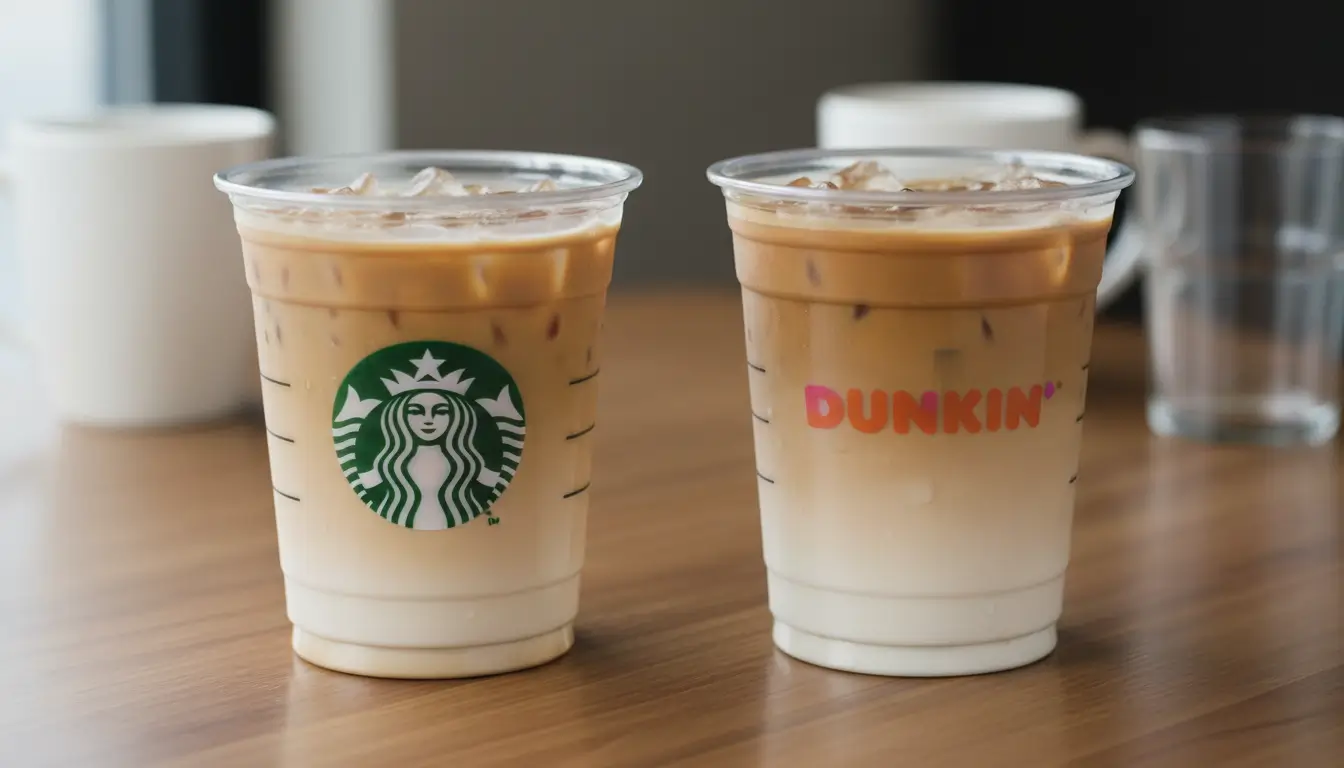
Choosing between Dunkin vs Starbucks protein drinks isn't just about taste, it's about calories, protein sources, milk options, and how easily you can customize your order. In this guide, we compare Dunkin and Starbucks side by side, breaking down protein content, calorie ranges, and practical ordering tips so you can decide which brand fits your nutrition goals best.
Dunkin vs Starbucks Protein Drinks: Quick Comparison
Starbucks generally offers higher protein potential through milk-based drinks, while Dunkin often provides lower-calorie, simpler coffee options that are easier to keep light.
| Category | Starbucks | Dunkin |
|---|---|---|
| Primary protein source | Milk (dairy & soy) | Milk (mostly dairy) |
| Typical protein range | ~10–25g | ~6–18g |
| Customization depth | Very high | Moderate |
| Lower-calorie base drinks | Cold brew, Americano | Brewed coffee, iced coffee |
| Best for | Protein-focused orders | Calorie-focused simplicity |
Swipe to see more →
Where Protein Comes From at Each Brand
At both Starbucks and Dunkin, protein comes mainly from milk.
- Dairy milk (casein + whey)
- Soy milk (more common at Starbucks)
- Food paired with drinks
Espresso itself adds negligible protein to both brands.
Milk Options: Starbucks vs Dunkin
Milk choice plays a major role in protein and calories.
Starbucks Milk Options
- Nonfat, 2%, whole milk
- Soy milk (strong plant-based protein option)
- Almond & oat milk (lower protein)
For Starbucks-specific options, see our best high-protein Starbucks drinks ranking.
Dunkin Milk Options
- Skim, 2%, whole milk
- Oat or almond milk (varies by location)
- Limited plant-based protein choices
Starbucks offers more flexibility for building higher-protein drinks, especially for plant-based orders.
Protein & Calories: What to Expect
These are typical ranges for standard orders (Grande-equivalent sizes vary).
| Drink Type | Starbucks Protein | Dunkin Protein | Calories (Range) |
|---|---|---|---|
| Latte (milk-based) | ~12–20g | ~10–16g | 130–250 |
| Cold brew + milk | ~10–15g | ~6–12g | 40–120 |
| Cappuccino | ~9–14g | ~8–12g | 90–180 |
Swipe to see more →
👉 Use the Starbucks Protein & Calorie Calculator to see exact macros for your personalized drink.
👉 Use the Dunkin Nutrition Calculator to see exact macros for your personalized drink.
Customization: Who Wins?
Starbucks
- Easy milk swaps
- Sugar-free syrups
- Adjustable syrup pumps
- Multiple drink bases
For detailed customization strategies, see our guide on how to add protein to Starbucks drinks.
Dunkin
- Faster ordering
- Fewer syrup variations
- Simpler menu structure
Starbucks wins on customization depth, while Dunkin wins on speed and simplicity.
Best Choice by Goal
✅ If your goal is higher protein
Choose Starbucks:
- Milk-heavy lattes
- Soy milk for plant-based protein
- Larger size flexibility
✅ If your goal is lower calories
Choose Dunkin:
- Brewed coffee
- Iced coffee with skim milk
- Minimal add-ins
✅ If your goal is balanced macros
Either works with smart ordering.
For meal-level protein, a shake may be more practical than coffee, our protein coffee vs protein shake comparison explains why.
How to Order Smart at Either Brand
- Choose nonfat, skim, or 2% milk
- Reduce syrup pumps
- Skip whipped cream and drizzles
- Order clearly and simply
Example (Starbucks): "Grande iced latte with nonfat milk, one pump of sugar-free vanilla."
Example (Dunkin): "Medium iced coffee with skim milk, no added sugar."
Use a Calculator Before You Order
Calories and protein change quickly with customization.
DrinkDigits calculators let you:
- Adjust milk type
- Change drink size
- Remove syrups and toppings
- Compare brands side by side
👉 Use the Compare Starbucks vs Dunkin Nutrition tools to see exact macros for both brands.
Head-to-Head Comparison (Medium/Grande)
For quick reference, the two brands side by side at similar drink sizes:
| Drink Type | Dunkin (Medium) | Starbucks (Grande) |
|---|---|---|
| Iced Latte, nonfat milk | ~12 g protein, ~140 cal | ~15 g protein, ~170 cal |
| Latte with Protein Milk / Boosted | ~15 g protein (Protein Milk, 2026) | ~25 g protein (Protein Cold Brew, limited regions) |
| Cold Brew with milk | ~5 g protein, ~40 cal | ~6 g protein, ~35 cal |
| Matcha Latte | ~10 g (Protein Matcha: 15 g) | ~11 g protein |
| Vanilla Latte (flavored) | ~12 g protein, ~200 cal | ~13 g protein, ~250 cal |
| Caramel Macchiato | ~10 g protein, ~240 cal | ~11 g protein, ~250 cal |
Swipe to see more →
Dunkin's advantage: Protein Milk is available nationwide and adds 15 g to most drinks with one modification. Starbucks' Protein Cold Brew tops out higher (25 g) but is only available in select regions.
Which Chain Wins for Your Specific Goal
Lowest calorie protein drink. Dunkin. Their medium iced coffee with skim milk and no flavoring is roughly 60 calories with 8 g protein. Hard to beat.
Highest protein available. Starbucks Protein Cold Brew (where available) at ~25 g. Next best: Dunkin Protein Milk drinks at 15 g.
Most consistent nationwide. Dunkin. Protein Milk is on the permanent menu across all U.S. locations.
Most customization flexibility. Starbucks. Soy milk option, multiple sugar-free syrups, and Protein Boosted Milk in some regions.
Best for budget. Dunkin. Typical medium drinks run $3 to $4, compared to $4 to $5.50 at Starbucks for similar sizes.
Best for plant-based. Starbucks. Soy milk at Starbucks delivers about 8 g protein per 8 oz. Dunkin's Protein Milk is dairy-based and not vegan.
For the full Dunkin protein lineup see our Dunkin Protein Milk and drinks guide. For Starbucks-specific protein customization, see how to add protein to Starbucks drinks and best high-protein Starbucks drinks.
Summary
There is no single winner. Starbucks edges out Dunkin on peak protein per drink (25 g vs 15 g) but only in regions with Protein Cold Brew. Dunkin wins on nationwide availability, price, and low-calorie options. For most daily coffee drinkers, either chain can support 12 to 18 g protein per drink with simple milk and size choices.
Sources & References
- Starbucks Menu: Protein Drinks. Starbucks official protein drink nutrition
- Dunkin' Menu: Protein Milk & Drinks. Dunkin' protein drink nutrition
- USDA FoodData Central. Reference protein values
- International Society of Sports Nutrition: Protein Position Stand. Peer-reviewed protein recommendations