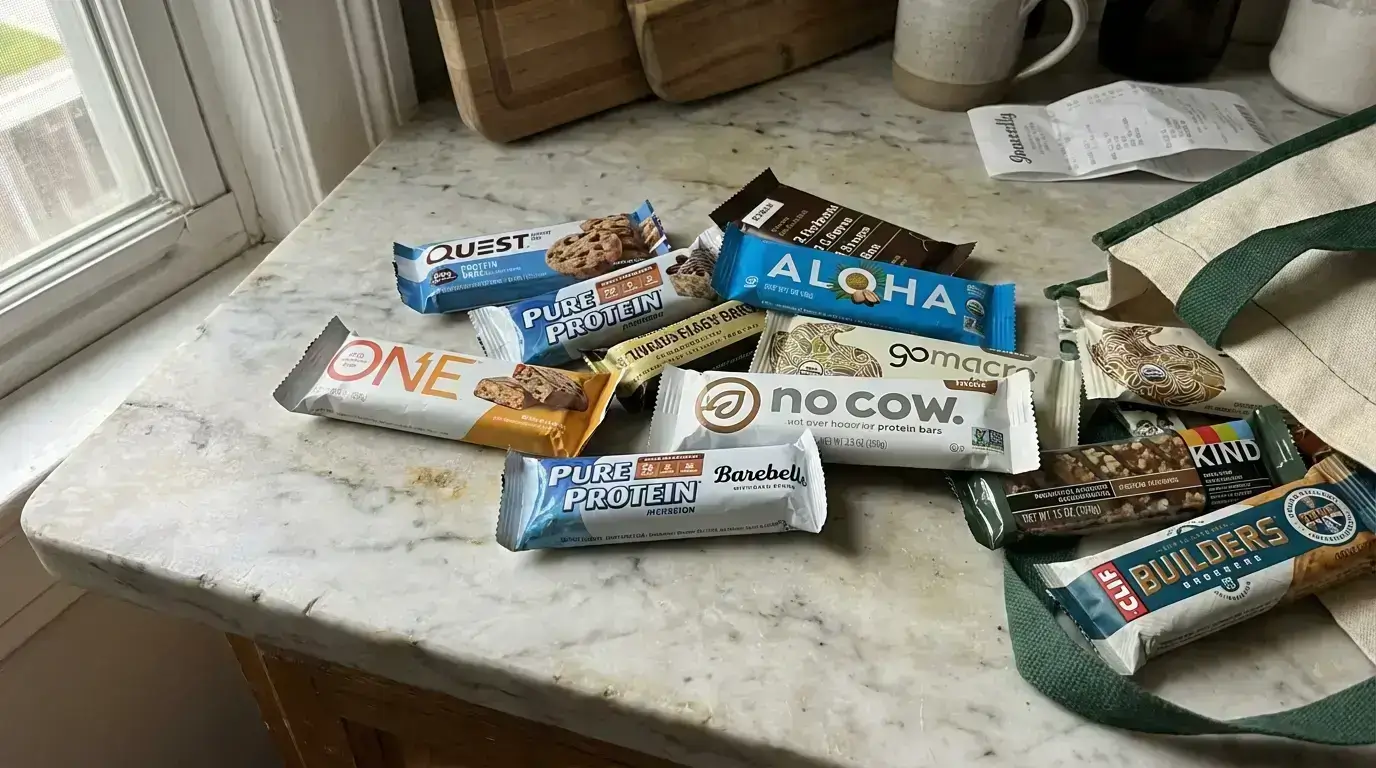
Not every protein bar is created equal. Some pack 20+ grams of complete protein with barely any sugar; others look like a health food but deliver the sugar of a candy bar. This guide cuts through the marketing and ranks the 10 most popular protein bars in the U.S. for 2025 by what actually matters: protein content, sugar, calories, ingredient quality, and what each one is genuinely best for.
If you're specifically comparing ALOHA flavors (one of the most searched protein bars online right now), scroll to the ALOHA Organic Protein Bar section for our full flavor ranking. To see how any bar fits your personal macros, use the DrinkDigits Macro Calculator. Toggle the bar into your daily plan and see calorie and protein impact in seconds.
How to Choose a Protein Bar (5 Things That Actually Matter)
Before the rankings, here's what separates a legitimately good bar from a dressed-up candy bar:
- Protein per bar (and per calorie). Aim for bars delivering at least 0.09 g of protein per calorie (e.g., 18 g protein / 200 calories). Anything below that is mostly carbs and fat pretending to be a protein bar.
- Added sugar under 8 g. Above 8 g means the bar is closer to a candy bar in glucose impact. The American Heart Association recommends no more than 25 g added sugar per day for women, 36 g for men.
- Fiber above 3 g. Fiber helps satiety and blunts blood sugar response. Bars with 5–10 g fiber are generally more filling.
- Real ingredient list. Fewer ingredients with recognizable names (nuts, oats, cocoa, protein source) typically beat bars with long chains of sugar alcohols and thickeners.
- Protein source quality. Whey isolate and egg whites score highest on PDCAAS/DIAAS (see our Protein Quality Score guide). Pea + rice combined is a strong plant-based alternative. Soy alone is complete and well-absorbed.
Quick Comparison Table. All 10 Bars
| # | Bar | Calories | Protein | Sugar | Fiber | Protein Source | Best For |
|---|---|---|---|---|---|---|---|
| 1 | Quest Protein Bar | 200 | 20 g | 2 g | 10 g | Whey + milk isolate | Low sugar, gym recovery |
| 2 | Pure Protein Bar | 180 | 21 g | 3 g | 2 g | Whey + milk isolate | Post-workout, budget |
| 3 | Barebells Soft Bar | 220 | 16 g | 1 g | 5 g | Whey + casein | Taste / dessert feel |
| 4 | RXBAR | 200 | 12 g | 14 g | 5 g | Egg whites + nuts | Clean ingredient labels |
| 5 | ALOHA Organic (plant) | 220 | 14 g | 5 g | 10 g | Brown rice + pumpkin | Vegan, organic, taste |
| 6 | ONE Protein Bar | 220 | 20 g | 1 g | 8 g | Whey + milk isolate | Low sugar + dessert flavors |
| 7 | No Cow Protein Bar | 200 | 20 g | 1 g | 16 g | Pea + rice | Vegan + high fiber |
| 8 | GoMacro MacroBar | 270 | 12 g | 8 g | 2 g | Organic rice + pea | Everyday snack, travel |
| 9 | KIND Protein | 250 | 12 g | 7 g | 6 g | Soy + peanuts | Heart-conscious snack |
| 10 | CLIF Builders | 280 | 20 g | 17 g | 3 g | Soy isolate | Pre/post-workout carbs |
Swipe to see more →
All figures per bar, based on publicly available brand nutrition labels. Values may vary slightly by flavor.
1. Quest Protein Bar
Overview:
Quest Protein Bars are recommended for their high protein content and minimal added sugar. They are formulated to support muscle recovery and appetite control without causing large blood sugar spikes. Their high fiber content also helps keep you full longer.
Protein source: Whey protein isolate + Milk protein isolate
Price: $2.75 (Per Bar)
Nutrition Highlight (per bar):
- Calories: 200
- Protein: 20g
- Sugar: 2g
- Fiber: 10g
Best for: Weight management, low-sugar diets, gym recovery
2. Pure Protein Bar
Pure Protein Bars are designed for performance focused nutrition and are commonly used post workout. They deliver a high dose of complete protein with moderate calories, making them practical for muscle repair. The brand is widely available and trusted in the U.S. fitness market.
Protein source: Whey protein isolate + Milk protein isolate + whey protein concentrate
Price: $1.99 (Per Bar)
Nutrition Highlight (per bar):
- Calories: 180
- Protein: 21g
- Sugar: 3g
- Fiber: 2g
- Gluten Free
Best for: Post workout recovery, muscle building
3. Barebells Protein Bar (Soft Bars)
Barebells Protein Bars are known for their candy bar like texture while maintaining strong nutritional value. They are often praised in taste tests for avoiding the chalky texture common in protein bars. Despite their dessert style flavors, they maintain low sugar levels.
Protein source: Whey protein concentrate + calcium caseinate + micellar casein isolate + whey protein hydrolysate
Price: $3.91 (Per Bar)
Nutrition Highlight (per bar):
- Calories: 220
- Protein: 16g
- Sugar: 1g added
- Fiber: 5g
Best for: On the go snacking, taste focused protein intake
4. RXBAR
RXBAR focuses on whole-food ingredients with transparent labeling, listing all ingredients clearly on the front of the package. Protein comes primarily from egg whites, offering a natural protein source. These bars are less processed than many competitors.
Protein source: Egg whites + Nuts (Almonds & Cashews)
Price: $2.33 (Per Bar)
Nutrition Highlight (per bar):
- Calories: 200
- Protein: 12g
- Sugar: 14g
- Fiber: 5g
Best for: Clean eating, minimal ingredient diets
5. ALOHA Organic Protein Bar (Plant-Based). Vegan Top Pick
ALOHA Protein Bars are the most-searched organic, plant-based protein bar in the U.S. They stand out for three reasons: certified USDA Organic ingredients, no artificial sweeteners, and a flavor lineup that consistently wins taste tests over other vegan bars.
Protein source: Brown rice protein + pumpkin seed protein (complete amino acid profile when combined)
Price: ~$2.91 per bar (lower in multipacks)
Nutrition Highlight (per bar):
- Calories: 220
- Protein: 14 g
- Sugar: 5 g (no added sugar; from dates and other whole foods)
- Fiber: 10 g
- Certified: USDA Organic, Non-GMO, Vegan, Gluten-Free, Soy-Free
ALOHA Flavors Ranked (Best to Least Popular)
Based on consumer reviews, Amazon ratings, and Reddit polls across r/vegan, r/proteinbars, and r/nutrition communities:
- Chocolate Chip Cookie Dough, the most popular flavor; tastes like an actual cookie dough bar, soft texture, widely considered the best overall.
- Peanut Butter Chocolate Chip, close second; classic flavor, strong peanut butter taste, satisfying.
- Chocolate Fudge Brownie, rich, dessert-like, hits for chocolate lovers.
- Vanilla Almond Crunch, milder, nutty, good for people who don't love overly sweet bars.
- Lemon Cashew, polarizing; zesty and unique, loved or skipped.
- Chocolate Caramel Pecan, newer flavor, sweet-salty combo.
- Coconut Chocolate Almond, subtle coconut, good but not the strongest.
- Mint Chocolate Chip, works if you like mint; avoid if you don't.
Are ALOHA Bars Actually Good for You?
Short answer: yes, for most people. ALOHA earns its reputation because:
- No artificial sweeteners (sucralose, aspartame, sugar alcohols) that other low-sugar bars rely on
- Complete protein from the brown rice + pumpkin seed combination (when consumed together)
- 10 g of fiber per bar, most bars don't hit that
- 5 g of sugar per bar is low relative to whole-food plant-based bars like GoMacro
Caveats: at 220 calories and 14 g protein, ALOHA has a slightly lower protein-per-calorie ratio than whey-based bars like Quest or ONE. If pure protein density is your priority, a whey bar wins. If you want organic + vegan + no artificial sweeteners + great taste, ALOHA is the top plant-based choice.
Best for: Vegan, organic, dairy-free diets; people avoiding artificial sweeteners; taste-first plant-based eaters
6. ONE Protein Bar
ONE Protein Bars combine high protein with extremely low sugar, making them popular among people managing carbohydrate intake. They are known for dessert-inspired flavors without excessive calories. The protein content supports muscle maintenance and satiety.
Protein source: Whey protein isolate + Milk protein isolate
Price: $2.04 (Per Bar)
Nutrition Highlight (per bar):
- Calories: 220
- Protein: 20g
- Sugar: 1g
- Fiber: 8g
Best for: Low sugar diets, flavor variety
7. No Cow Protein Bar
No Cow Protein Bars are plant-based and formulated for low-sugar nutrition. They use pea and rice protein blends and are high in fiber. These bars are often recommended for people avoiding dairy and added sugars.
Protein source: Pea protein + Rice protein
Price: $2.74 (Per Bar)
Nutrition Highlight (per bar):
- Calories: 200
- Protein: 20g
- Sugar: 1g added
- Fiber: 16g
Best for: Vegan, low sugar, dairy-free diets
8. GoMacro MacroBar
GoMacro bars focus on organic, whole food ingredients rather than extreme protein levels. They provide steady energy and are easier to digest for many people. Often recommend for travel and long days.
Protein source: Organic sprouted brown rice protein + organic pea protein
Price: $3.20 (Per Bar)
Nutrition Highlight (per bar):
- Calories: 270
- Protein: 12g
- Sugar: 8g
- Fiber: 2g
Best for: Everyday snacking, sustained energy
9. KIND Protein Bar
KIND Protein Bars emphasize nuts, whole grains, and heart-healthy fats. While lower in protein than gym-focused bars, they provide a more traditional snack profile. They are widely trusted and clearly labeled.
Protein source: Soy protein + Peanuts
Price: $1.59 (Per Bar)
Nutrition Highlight (per bar):
- Calories: 250
- Protein: 12g
- Sugar: 7g
- Fiber: 6g
Best for: Balanced snacking, heart-conscious diets
10. CLIF Builders Protein Bar
CLIF Builders Protein Bars are popular among fitness enthusiasts for their balanced mix of high protein and carbohydrates. They use a complete protein blend that provides all essential amino acids, making them suitable for both pre and post workout fuel. People like its solid energy.
Protein source: Soy protein isolate + Soy Protein Concentrate
Price: $1.90 (Per Bar)
Nutrition Highlight (per bar):
- Calories: 280
- Protein: 20g
- Sugar: 17g
- Fiber: 3g
Best for: Active individuals, pre or post workout recovery
Best Protein Bar by Use Case
Best overall, low sugar, high protein: Quest Protein Bar (20 g protein, 2 g sugar, 10 g fiber) Best for taste (dessert-like): Barebells Soft Bar or ONE Protein Bar Best for post-workout: Pure Protein Bar (21 g protein, under $2 per bar) Best plant-based / vegan: ALOHA Organic Protein Bar or No Cow (highest vegan protein) Best clean / whole-food ingredients: RXBAR (ingredients listed on the front of the package) Best for weight loss: Quest or ONE (low sugar, high protein, high fiber, 200–220 cal) Best for muscle gain / mass: CLIF Builders (20 g protein + carb load for training) Best for diabetes or low sugar: Quest, ONE, No Cow, all at 1–2 g sugar per bar Best budget option: KIND Protein ($1.59) or Pure Protein ($1.99) Best for travel / long days: GoMacro MacroBar, organic, digests well, stable
Protein Bar Mistakes to Avoid
- Confusing "protein bar" with "candy bar with added protein." Many bars labeled "protein" have 200+ calories, 15+ g sugar, and only 8–10 g protein. Check the label, not the box.
- Relying on bars for daily protein instead of whole foods. Bars are convenient but shouldn't be your primary protein source. Meat, fish, eggs, legumes, and dairy deliver protein with far more nutrient density.
- Ignoring fiber. A high-protein, low-sugar bar with 0–1 g fiber will leave you hungry in 30 minutes. Aim for 3–5 g minimum.
- Assuming "organic" means "low calorie." ALOHA and GoMacro bars are 220–270 calories, roughly the same as any other bar. Organic does not mean diet-friendly.
- Eating two bars as a meal replacement without checking macros. Two bars = ~400 calories but typically only ~30 g protein. A real meal with eggs, oats, or chicken gives more satiety per calorie.
How Bars Compare to Coffee-Shop Protein Drinks
If your protein goal is to hit a daily target (e.g., 100+ g for active adults), it's worth knowing how bars stack up against coffee-shop protein drinks:
- 1 protein bar (~20 g) ≈ 1 Dunkin' Protein Milk drink (15 g) ≈ roughly 3 oz chicken breast (21 g)
- Starbucks high-protein drinks: see our best high-protein Starbucks drinks guide
- Dunkin' protein drinks: see our Dunkin' 2026 protein lineup guide
- Coffee vs. shake debate: our protein coffee vs. protein shake breakdown
Use the DrinkDigits Macro Calculator to estimate how many bars, drinks, or meals it takes to hit your daily protein target.
Final Thoughts
Protein bars are a useful supplement, not a magic food. The best one for you depends on your goal: Quest and ONE dominate for low-sugar, high-protein needs; ALOHA and No Cow lead plant-based categories; RXBAR wins on simplicity; Barebells and ONE lead on taste. None of them replace real food, but if you need something portable that delivers 15–20 g of protein with minimal sugar, all 10 bars on this list are legitimate options.
Sources & References
- USDA FoodData Central. Verified protein and nutrient data for commercial bars
- FDA Nutrition Facts Labels. How manufacturers report protein, sugar, and fiber
- International Society of Sports Nutrition: Protein Position Stand. Evidence-based daily protein recommendations
- Individual brand nutrition labels (Aloha, RXBAR, Quest, Barebells, Built Bar, etc.) from manufacturer websites