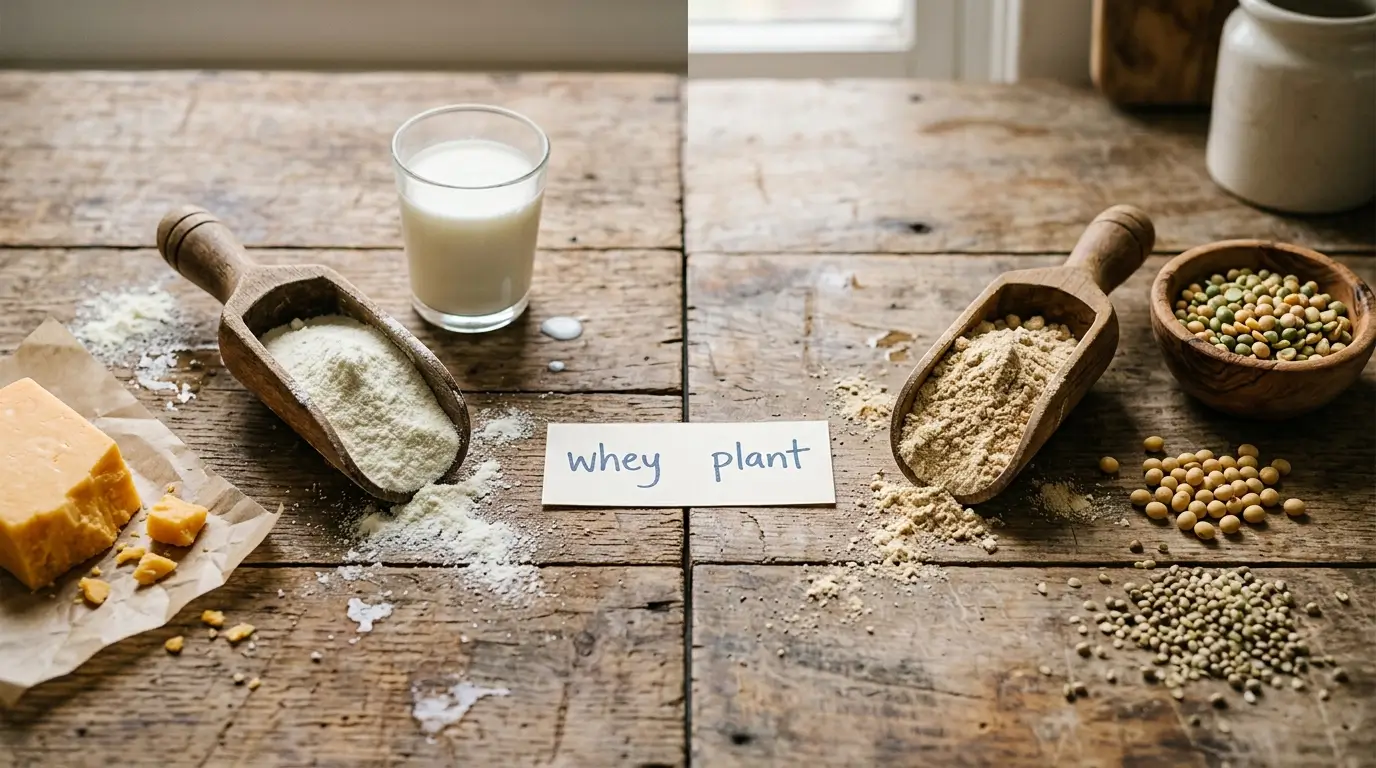
The plant-versus-whey protein debate usually gets framed as "which is better?" That is the wrong question. Both work. Both can build muscle. Both can support weight loss. The real question is: what do you need the protein to do, and which one fits better given your diet, preferences, and goals?
This guide compares the two head to head across the things that actually matter: amino acid completeness, digestibility, muscle-building research, and practical use cases.
The Quick Answer
Whey protein (from milk) is the single highest-quality protein supplement available. It has a DIAAS score above 1.00, is rich in leucine (the amino acid that triggers muscle protein synthesis), digests quickly, and produces slightly greater muscle protein synthesis response per gram than plant alternatives.
Plant proteins (pea, rice, soy, hemp, and blends) work well when chosen correctly. Soy is complete by itself. Pea plus rice combines to match whey on amino acid completeness. Single-source plant proteins other than soy are often incomplete.
For most recreational lifters consuming 120+ g of protein per day from mixed sources, the difference is negligible in practice. For strict vegans or anyone who wants one scoop per day to bridge a dietary gap, source matters more.
Amino Acid Profile: What "Complete" Actually Means
A complete protein contains all nine essential amino acids in adequate ratios. Incomplete proteins are low in one or more.
- Whey: complete, high in all essentials, particularly high in leucine and branched-chain amino acids (BCAAs).
- Soy protein: complete, though slightly lower in methionine than animal sources.
- Pea protein: incomplete on its own, low in methionine.
- Rice protein: incomplete on its own, low in lysine.
- Pea + rice (50/50 blend): complete, comparable to soy.
- Hemp protein: complete but lower in lysine.
"Complete" versus "incomplete" mattered more in the 1970s when people assumed you had to combine proteins within a single meal (the old "complementary protein" theory). We now know that amino acid balancing happens over the day, not within a meal. You can eat rice for lunch and beans for dinner and still get a complete profile.
For a scientific background on protein scoring, see our PDCAAS vs DIAAS guide.
Muscle Building: Does the Source Matter?
Research on whey versus plant protein for muscle growth has shifted over the past decade. Early studies (pre-2018) showed whey consistently beating plant protein for muscle protein synthesis. Recent studies using blended plant proteins (especially pea plus rice) show much smaller differences.
Specifically:
- Leucine content drives muscle protein synthesis. Whey has roughly 11% leucine. Pea protein is about 8%. Rice protein is about 8%. Soy is about 8%. Blended plant proteins closely match whey's leucine per scoop when dosed correctly.
- Digestion speed matters less than previously thought. Whey digests faster (amino acids peak in blood in 60 to 90 minutes). Plant proteins digest slower but produce similar 24-hour muscle protein synthesis totals.
- Total daily protein and training stimulus dominate source differences. A recent study (Sports Medicine, 2021) on young men training for 12 weeks found equal muscle gain on pea protein versus whey when total protein was matched.
Bottom line: whey has a small edge per gram for acute muscle protein synthesis, but the difference is nearly invisible at typical training-population protein intakes (120+ g/day from mixed sources).
Digestibility and Gut Tolerance
This is where practical differences show up.
Whey. About 20% of adults worldwide are lactose intolerant. Whey isolate has very little lactose (under 1 g per scoop) and most lactose-intolerant people tolerate it. Whey concentrate has more lactose (3 to 5 g per scoop) and may cause bloating in sensitive individuals.
Plant proteins. Pea and rice proteins are naturally lactose-free. Soy is lactose-free but causes GI upset in some people due to its fiber and phytate content. Hemp is highly digestible but low in overall protein density.
Blends. Most plant protein powders blend pea, rice, and sometimes other sources to cover the amino acid profile while keeping taste and texture acceptable.
Satiety and Weight Loss
One frequently overlooked advantage of plant protein: the fiber it often contains. Pea, soy, and hemp protein retain some of the fiber from the parent plant, which improves satiety without adding calories. Whey is essentially fiber-free.
For weight loss specifically, a higher-satiety protein (plant-based, or whey combined with a fiber source) can help meal-to-meal hunger control. For muscle building, the fiber is neutral at best.
Cost and Accessibility
| Source | Typical cost per 25g protein | Notes |
|---|---|---|
| Whey concentrate | $0.60 to $0.90 | Best value per gram |
| Whey isolate | $0.90 to $1.30 | Less lactose, higher purity |
| Pea protein | $0.80 to $1.10 | Good taste in blends |
| Rice protein | $0.80 to $1.10 | Gritty texture alone |
| Soy isolate | $0.70 to $1.00 | Good value complete protein |
| Premium plant blends (Orgain, Vega) | $1.50 to $2.00 | Higher cost for taste and marketing |
Swipe to see more →
Whey concentrate is usually the cheapest high-quality protein supplement. Plant protein blends from major brands tend to run 50 to 100% more expensive per gram.
Environmental and Ethical Considerations
Whey is a byproduct of cheesemaking, so whey protein is already a lower-impact animal protein option. But any animal protein has a larger environmental footprint than plant sources per gram. If sustainability or ethics drive your decision, plant protein is the clear choice.
When to Choose Which
Pick whey if:
- You want the best muscle-building response per scoop
- You are building muscle on a budget
- You tolerate dairy
- Convenience and taste are your priorities
Pick plant protein if:
- You are vegan, plant-based, or avoid dairy
- You have lactose intolerance and whey isolate still causes issues
- You want the extra fiber for satiety
- Environmental footprint is a priority
Pick a blend if:
- You want broad amino acid coverage without overthinking it
- You use protein mainly for general nutrition rather than muscle optimization
- You appreciate taste variety across sources
How Much to Use
Daily protein targets are the same regardless of source:
- Sedentary adult: 0.36 g per lb bodyweight
- Active / weight management: 0.6 to 0.8 g per lb
- Muscle gain / cutting while training: 0.8 to 1.0 g per lb
Protein powder is a convenience, not a requirement. Whole-food sources (meat, eggs, dairy, legumes, tofu) can easily cover these targets. Most people use one to two scoops per day to bridge gaps rather than replacing whole-food protein entirely.
Calculate your personal protein target with the DrinkDigits Macro Calculator, and see our protein quality score guide for a deeper dive on how to evaluate any protein source.
Sources & References
- Pinckaers PJM et al., Sports Medicine (2021). Plant versus animal protein for muscle protein synthesis.
- Morton RW et al., Br J Sports Med (2018). Meta-analysis on protein intake and muscle growth.
- FAO: Dietary Protein Quality Evaluation (DIAAS report, 2013). DIAAS scores for protein sources.
- USDA FoodData Central. Amino acid data for whey, soy, pea, rice, and hemp proteins.
- NIH Office of Dietary Supplements: Protein. Government reference for daily protein recommendations.