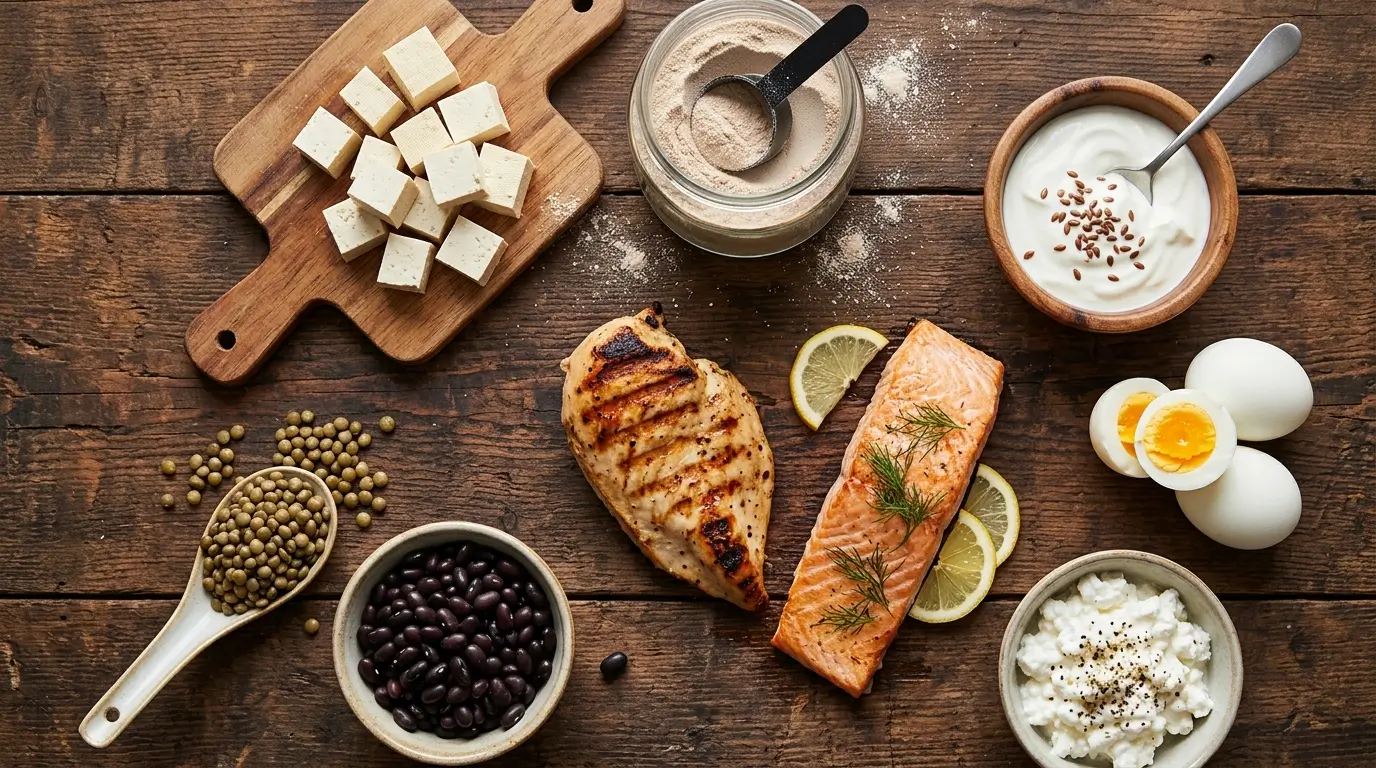
Knowing your daily protein target is one thing. Actually getting 120 to 180 grams into your mouth every day, without eating the same chicken breast seven days a week, is another. This guide organizes high-quality protein sources by diet preference, with protein per serving, cost notes, and how each one fits into real meals.
For the math on how much protein you personally need, use the DrinkDigits Macro Calculator or read our how to calculate daily protein intake guide.
The Short List of Staples
If you had to pick five foods to form the backbone of a high-protein diet, these are the workhorses:
- Chicken breast (26 g per 3 oz), cheapest lean meat, versatile in recipes
- Eggs (6 g per egg, 12 g per 2 eggs), inexpensive, nutrient-dense whole-food protein
- Greek yogurt (17 g per 6 oz, plain nonfat), high satiety, convenient
- Whey protein powder (25 g per scoop), cheapest per-gram, flexible timing
- Canned tuna or salmon (20 to 25 g per 3 oz), shelf-stable, cheap, omega-3 bonus
These five alone can cover 100+ g of protein per day without cooking skills. Add variety from the category lists below.
Omnivore (Animal + Plant)
Omnivore diets have the easiest time hitting protein targets. Animal sources are high-DIAAS and dense per calorie.
Lean meats (25 to 30 g per 3 oz serving):
- Chicken breast (skinless)
- Turkey breast (skinless)
- Lean beef (sirloin, tenderloin, 93/7 ground)
- Lean pork (tenderloin)
- Venison, bison (leaner game meats)
Fish and seafood (20 to 25 g per 3 oz):
- Salmon, tuna, cod, tilapia, halibut
- Shrimp, scallops, crab
- Canned tuna, canned salmon, sardines
Dairy and eggs:
- Whole eggs, egg whites
- Cottage cheese (high casein, slow-digesting)
- Plain Greek yogurt (nonfat or 2%)
- Cheese (string cheese, feta, parmesan)
- Milk (1% or 2% for protein-to-calorie ratio)
Supplements:
- Whey protein concentrate or isolate
- Casein protein (pre-sleep)
- Ready-to-drink protein shakes
- See our Dunkin Protein Milk guide and high-protein Starbucks drinks for coffee-shop protein options
Pescatarian (No Red Meat or Poultry)
Pescatarians skip red meat and poultry but eat fish, dairy, and eggs. Protein intake is easy and comes with bonus omega-3s from fatty fish.
Fish (focus on variety and sustainability):
- Fatty fish for omega-3s: salmon, sardines, mackerel, herring
- Lean white fish: cod, halibut, tilapia, sole
- Canned options (budget): tuna, salmon, sardines
- Shellfish: shrimp, mussels, scallops
Plus all dairy and eggs from the omnivore list.
A typical pescatarian day:
- Breakfast: 2 eggs + Greek yogurt with berries
- Lunch: Tuna salad with mixed greens and quinoa
- Snack: Cottage cheese with nuts
- Dinner: 6 oz salmon + roasted vegetables + rice
Daily total: around 140 g protein.
Vegetarian (No Meat, Dairy + Eggs OK)
Lacto-ovo vegetarians have solid options. Dairy and eggs cover most of the animal-protein spectrum.
Egg-based meals:
- Egg whites (11 g per 3 whites, near zero fat)
- Whole eggs (6 g each, with healthy fats)
- Egg scrambles, omelets, frittatas
Dairy-based meals:
- Cottage cheese (1 cup = 28 g protein)
- Greek yogurt (1 cup = 23 g)
- Milk, ricotta, cheese
Plant proteins for variety and fiber:
- Tofu (firm): 10 g per 1/2 cup
- Tempeh: 15 g per 1/2 cup
- Edamame: 17 g per cup
- Lentils: 18 g per cup cooked
- Black beans, chickpeas, kidney beans: 15 g per cup cooked
- Quinoa: 8 g per cup cooked (complete protein)
Supplements:
- Whey protein (vegetarian-friendly since it's dairy-derived)
- Casein
- Plant-based blends
A lacto-ovo vegetarian can easily hit 140+ g protein per day by mixing these. Tofu and tempeh are underrated: they are cheap, high-protein plant foods that work in stir-fries, grain bowls, and salads.
Vegan (No Animal Products)
Vegans need to be slightly more intentional. Most single plant proteins are incomplete, and many are less protein-dense than animal foods. But hitting 120+ g protein per day on a vegan diet is absolutely achievable with the right source mix.
Top-tier vegan protein sources:
- Soy protein isolate (25 g per scoop, DIAAS 0.90)
- Tofu (firm or extra-firm, 10 g per 1/2 cup)
- Tempeh (15 to 20 g per 1/2 cup)
- Edamame (17 g per cup)
- Seitan (25 g per 3 oz, very high protein density but wheat-based)
- Pea + rice protein blends (25 g per scoop)
Second-tier vegan protein sources:
- Lentils (18 g per cup)
- Black beans, chickpeas, kidney beans (15 g per cup)
- Quinoa (8 g per cup, complete protein)
- Hemp seeds (10 g per 3 tbsp, complete protein)
Lower protein density but still useful:
- Nuts and nut butters (7 g per 1/4 cup, but high in fat)
- Chia and flax seeds (5 g per 3 tbsp)
- Oats (5 g per 1/2 cup dry)
- Whole-grain bread, pasta, rice (3 to 10 g per serving)
See our plant protein vs whey guide for a direct comparison and our vegan drinks at Dunkin and vegan drinks at Starbucks guides for how to get protein into your café orders.
A sample vegan day hitting 130 g protein:
- Breakfast: Tofu scramble + 1 slice whole-grain toast (20 g)
- Lunch: Lentil curry + rice + side of edamame (30 g)
- Snack: Pea + rice protein smoothie with fruit (25 g)
- Dinner: Tempeh stir-fry + quinoa + vegetables (30 g)
- Evening: Chia pudding with hemp seeds (12 g)
Total: around 117 g. Add an extra scoop of protein powder or more tofu to reach 130+.
Keto or Low-Carb
Keto and low-carb dieters need to prioritize protein + fat sources and avoid the higher-carb plant proteins.
Best fits:
- Eggs and egg whites
- Lean meat (chicken, turkey, beef)
- Fish and shellfish
- Cheese and full-fat dairy
- Whey protein isolate (1 to 3 g carbs per scoop)
Moderate fits (watch carbs):
- Greek yogurt (plain, unsweetened)
- Cottage cheese (watch sugar in flavored versions)
- Tofu (low-carb)
Avoid:
- Legumes (lentils, beans, chickpeas), too high-carb for keto
- Quinoa and most grains
- Sweetened protein powders
- Seitan (wheat-based, will kick you out of ketosis)
See our keto Starbucks drinks and keto Dunkin drinks guides for café-specific options.
Budget-Friendly Protein (Under $1 per 25 g)
If cost matters most:
- Dried beans and lentils (combine with rice for complete profile)
- Eggs
- Whey concentrate powder
- Canned tuna
- Chicken thighs
- Cottage cheese
- Plain Greek yogurt (store brand)
- Soy protein isolate
- Oats + milk
A daily protein target of 140 g can be hit for $4 to $6 per day with these staples.
High-Satiety Protein (Best for Weight Loss)
Some proteins keep you fuller longer than others. Research on satiety per gram consistently favors:
- Plain nonfat Greek yogurt, high protein-to-calorie ratio, thick texture
- Cottage cheese, slow-digesting casein
- Hard-boiled eggs, satisfying and portable
- Lean white fish (cod, tilapia, canned tuna), high protein per calorie
- Chicken breast, dense and filling
- Tofu and tempeh, fiber bonus for satiety
- Lentils and beans, fiber + protein combo
For weight-loss macro math, see our how to calculate macros for weight loss guide. The Starbucks Calorie Calculator and Dunkin Calorie Calculator help with café protein orders during a cut.
Ready-to-Grab Protein (Convenience)
For quick meals with zero prep:
- Hard-boiled eggs (pre-cooked, pre-peeled options at grocery stores)
- Canned tuna or salmon pouches
- Ready-to-drink protein shakes (see our Fairlife Core Power Elite review and Premier Protein Cafe Latte review)
- Greek yogurt cups (plain or with controlled sugar)
- String cheese
- Beef or turkey jerky (watch sodium)
- Protein bars (see our top 10 protein bars guide for real comparisons)
- Rotisserie chicken (grocery stores)
How Much Protein You Actually Need
Daily protein targets:
| Situation | Protein per lb bodyweight |
|---|---|
| Sedentary adult | 0.36 g |
| Active or weight management | 0.6 to 0.8 g |
| Muscle gain or training cut | 0.8 to 1.0 g |
| Very lean or heavy training | 1.0 to 1.2 g |
Swipe to see more →
Our Macro Calculator runs the math for your specific body weight, activity level, and goal. For understanding what the numbers mean, see macros explained and TDEE vs BMR explained.
Summary
Most adults hit their protein targets with 3 to 4 meals containing 25 to 40 g of protein each, plus one snack or shake. The sources vary by diet preference, but every diet pattern (omnivore, pescatarian, vegetarian, vegan, keto) has enough quality options to reach 120+ g per day without repetition.
Pick 5 to 7 staples that fit your budget and taste, rotate them across meals, and use a supplement only to fill gaps rather than as the foundation. For evaluating the quality of any protein source, see what is protein quality score and the PDCAAS vs DIAAS comparison.
Sources & References
- USDA FoodData Central. Per-serving protein and amino acid data for all foods listed.
- FAO: Dietary Protein Quality Evaluation (DIAAS report, 2013). Protein quality scores.
- NIH Office of Dietary Supplements: Protein. Daily protein recommendations.
- International Society of Sports Nutrition: Protein Position Stand. Protein guidance for active adults.
- Academy of Nutrition and Dietetics: Protein. Registered dietitian guidance on protein sources.