Two people close to me spent this year eating a lot less than they used to, for completely different reasons. One had months of stomach trouble. The other just lost her appetite in her sixties the way a lot of people do. Both ended up asking me the same question: if I can only get a little down, what should it be?
That is a genuinely hard problem, and almost nobody writes about it properly. Most nutrition advice assumes you are trying to eat less. When you are already eating less, the whole thing inverts. You are not managing a surplus, you are protecting a floor. Every ounce that goes in has to carry more than it used to.
Drinks turn out to be the answer more often than food, because liquid goes down when solids will not. So here are the actual numbers: how much protein you need, how much fluid you need, and the specific drinks and coffee shop orders that get you there without 40 grams of sugar riding along.
Why Drinks Do More Work When You Are Eating Less
When your intake drops from say 2,200 calories to 1,300, you did not just cut calories. You cut protein, potassium, magnesium, calcium and fluid by the same proportion, without meaning to. The deficit is invisible because you feel fine. You will notice it three months later as weakness, hair shedding, and workouts that stopped progressing.
There are two reasons drinks solve this better than food does.
Liquid bypasses the appetite problem. Chewing a chicken breast when you do not want to eat is a fight. Drinking 10 oz of something cold is not. That is the entire trick, and it is why hospitals and dietitians reach for shakes and fortified milk long before they reach for meal plans.
Drinks are the most protein-dense thing you can consume per unit of effort. A shake can carry 25 to 30 g of protein in less volume than a small yogurt. Nothing else on the menu does that.
How Much Protein Do You Actually Need Per Day?
The target that protects muscle during weight loss or low intake is 1.2 to 1.6 g of protein per kg of body weight per day, consistent with the International Society of Sports Nutrition position stand on protein. That is higher than the basic RDA of 0.8 g/kg, which is a floor for preventing deficiency, not a target for staying strong.
| Body weight | Daily protein target |
|---|---|
| 130 lb (59 kg) | 71 to 94 g |
| 160 lb (73 kg) | 87 to 116 g |
| 190 lb (86 kg) | 103 to 138 g |
| 220 lb (100 kg) | 120 to 160 g |
| 250 lb (113 kg) | 136 to 181 g |
Swipe to see more →
One caveat worth stating: at higher body weights, protein is often set off goal weight or an adjusted body weight rather than current weight, which lands lower than the table. If you are working with a dietitian, use their number over mine.
To build carbs and fat around this, run it through the Macro Calculator, and for the full method see how to calculate your macros.
Now put that number next to a small appetite. Hitting 120 g of protein on 1,300 calories of food you barely want is genuinely difficult. That is the entire case for drinking part of it.
How Much Water Should You Drink?
Fluid gets missed for the same reason protein does. Less food means less water from food, and thirst is an unreliable signal at the best of times.
A workable floor is half your body weight in ounces, with 64 to 100 oz covering most adults.
| Body weight | Daily fluid floor | Better target |
|---|---|---|
| 130 lb | ~65 oz | 70 to 85 oz |
| 160 lb | ~80 oz | 85 to 100 oz |
| 190 lb | ~95 oz | 95 to 105 oz |
| 220 lb | ~100 oz | 100 to 115 oz |
| 250 lb | ~110 oz | 110 to 125 oz |
Swipe to see more →
Coffee and tea count toward this. The old idea that caffeine cancels out the water does not hold at normal intakes, which I went through in does coffee dehydrate you. For a number adjusted to your weight, activity and climate, use the Water Intake Calculator.
The practical fix is timing, not willpower. Front-load. Get 16 to 20 oz down before your first coffee, because once you have eaten anything you will feel full for hours and squeezing liquid in gets harder. Then keep sips going between meals rather than with them, since drinking a lot alongside food makes fullness arrive faster and cuts the meal short.
The Best High-Protein Drinks, Ranked
| Drink | Protein per serving | Why it earns the space |
|---|---|---|
| Whey isolate shake | 25 to 30 g | Highest protein per ounce of anything you can drink, digests fast |
| Protein milk | ~15 g per cup | Drops into coffee, matcha or cereal with no new habit |
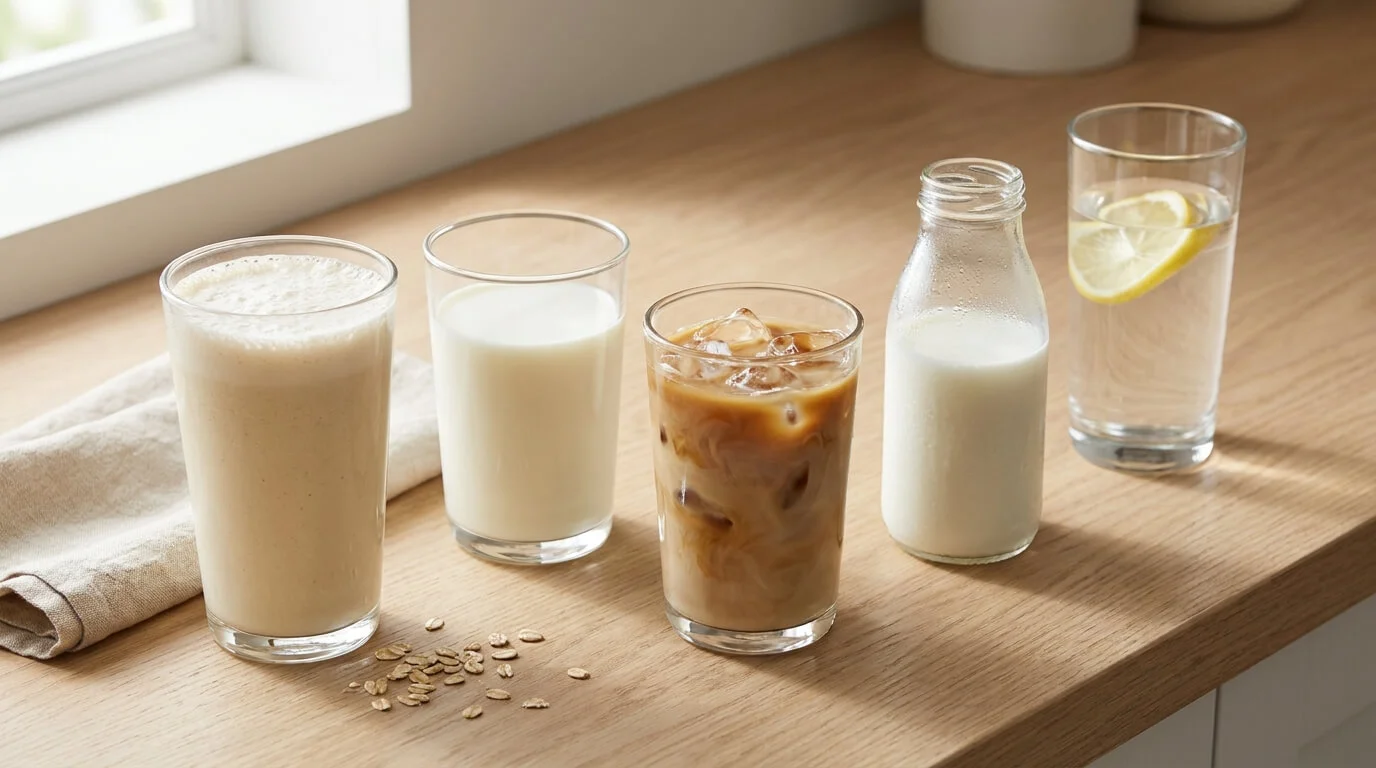
| Dairy milk | ~8 g per 8 oz | Protein plus calcium, potassium and fluid in one glass |
| Soy milk | ~7 to 8 g per 8 oz | The only plant milk with protein comparable to dairy |
| Kefir | ~9 to 11 g per cup | Protein plus live cultures, easier on digestion than plain milk for many |
| Latte with dairy or soy | 11 to 20 g | Turns a drink you already have into a protein serving |
| Bone broth | 6 to 10 g | Warm, salty and settling when nothing cold appeals |
| Greek yogurt drink | 12 to 20 g | Thick enough to work as a small meal replacement |
Swipe to see more →
Almond, oat and coconut milk sit at 1 to 3 g of protein per 8 oz. They are fine drinks, they are just not protein. If protein is the goal, that swap costs you most of it. The full breakdown is in oat vs almond vs soy milk.
Drinks That Waste a Small Appetite
Nothing here is dangerous. The point is opportunity cost. When your daily intake is small, a drink that returns no protein is a drink that pushed out one that would have.
Regular soda. About 39 g of sugar in 12 oz, zero protein.
Fruit juice. Same trade with a healthier reputation. An 8 oz orange juice is 21 g of sugar and under 2 g of protein.
Large blended coffee drinks. A Grande Frappuccino runs around 380 calories with very little protein. If that is your treat, have it on purpose, and see what a 380 calorie Frappuccino actually costs you.
Alcohol. Empty calories plus dehydration, and it lands harder on a light stomach.
Very sweet or heavily carbonated drinks. Both accelerate fullness. When you only have a small window where eating feels possible, filling it with bubbles and sugar is expensive.
The Highest-Protein Starbucks Orders
The rule at Starbucks is simple: milk gives you protein, syrup gives you sugar. Order more of the first and less of the second.
| Order | Protein | Calories | Notes |
|---|---|---|---|
| Venti Iced Latte, nonfat milk | ~20 g | ~180 | Easiest 20 g protein drink on the menu |
| Grande Iced Latte, nonfat milk | ~13 to 15 g | ~130 | Best protein per calorie |
| Grande Flat White, 2% milk | ~13 g | ~220 | Richer and more filling when food is unappealing |
| Grande Cappuccino, nonfat milk | ~11 g | ~100 | Extra foam means fewer calories, slightly less protein |
| Grande Soy Latte | ~11 g | ~180 | Best plant-based pick |
| Grande Protein Latte (where available) | ~25 to 28 g | ~280 | Close to a full protein serving in a cup |
| Grande Cold Brew with milk | ~6 to 8 g | ~30 to 80 | Lowest calorie option that still returns protein |
Swipe to see more →
Two customizations do most of the work. Ask for sugar-free syrup instead of standard, which strips most of the sugar without changing the drink much. And size up rather than sweeten, because the extra milk in a Venti is what carries the protein.
More in how to add 20 to 40 g protein to any Starbucks drink and the Starbucks milk options guide. Build your exact order in the Starbucks Calorie Calculator.
The Highest-Protein Dunkin Orders
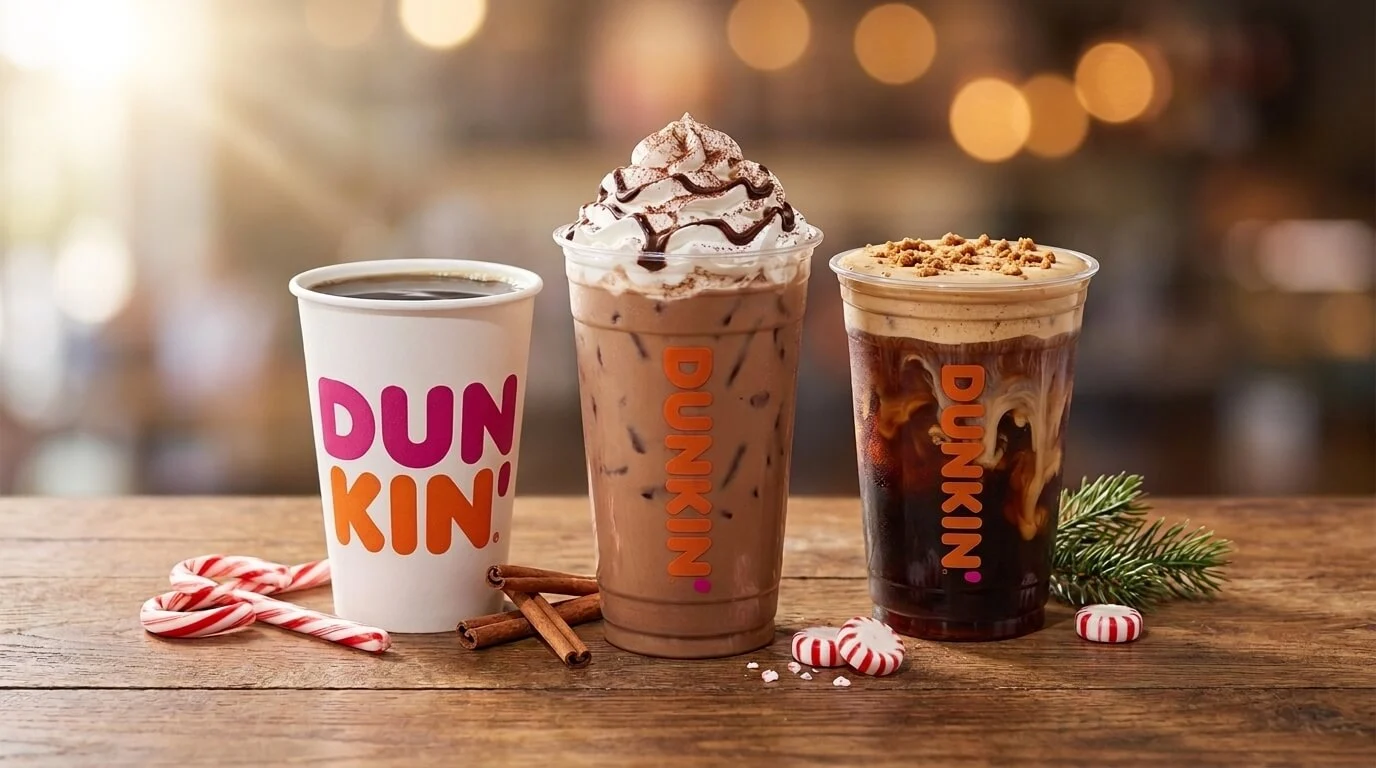
Dunkin's 2026 Protein Milk changed the math here. It carries 15 g of protein in a medium and goes into most drinks that take a milk base.
| Order | Protein | Calories | Sugar |
|---|---|---|---|
| Medium Iced Protein Latte, sugar-free vanilla | ~15 g | 170 | 13 g |
| Medium Almond Iced Protein Matcha Latte | ~15 g | 260 | 31 g |
| Medium Caramel Chocolate Iced Protein Latte | ~15 g | 280 | 38 g |
| Medium Iced Coffee, skim milk, no sugar | ~4 to 6 g | ~50 | ~5 g |
| Medium Hot Coffee, black | 0 g | 5 | 0 g |
Swipe to see more →
The Iced Protein Latte with sugar-free vanilla is the standout: 15 g of protein for 170 calories and 13 g of sugar. The flavored versions taste better but carry 31 to 42 g of sugar, which is most of a day's discretionary sugar in one cup. Full detail in the Dunkin protein drinks breakdown, and you can price any custom order in the Dunkin Calorie Calculator.
Coffee on an Empty Stomach
Worth a short section, because it trips up a lot of people with low appetite.
Black coffee first thing is a common trigger for reflux and queasiness, and if that queasiness kills the only hungry window you had, it costs you the whole morning's protein. Two changes usually fix it: get water and a little protein in before the coffee, and put milk in it instead of drinking it black. The milk buffers the acidity and quietly adds 8 to 13 g of protein.
Keep total caffeine under 400 mg a day, the standard adult ceiling. See how much caffeine is too much for what that looks like in real cups, or total your day in the Caffeine Calculator.
When You Actually Need Electrolytes
Not by default. If you are eating reasonably and feel fine, plain water and normal food cover it, and most electrolyte marketing is aimed at people who do not need it.
You probably do want them if you are training hard, sweating heavily, in real heat, getting muscle cramps or lightheaded when you stand up, or if your total food intake has dropped a lot, since that is where sodium, potassium and magnesium quietly go missing.
Look for sodium, potassium and magnesium with low or no sugar. Some popular packets carry around 1,000 mg of sodium each, which is a lot if you are not actually losing it, so start with half. Full comparison in electrolyte drinks compared.
A Simple Daily Drink Plan
A plan beats a list, so here is the one I gave both of them.
| Time | What | Why |
|---|---|---|
| On waking | 16 oz water | Front-load before fullness arrives |
| Breakfast | Latte with dairy or soy milk, or a protein shake | 13 to 25 g protein early, when appetite is at its best |
| Mid-morning | 16 oz water, sipped | Between meals, not with them |
| Lunch | Water, only a small amount with food | Large volumes with food cut the meal short |
| Afternoon | Unsweetened iced tea or a second coffee with milk | Fluid plus a few more grams of protein |
| Late afternoon | Protein shake if the day's total is short | The rescue lever, check honestly rather than guessing |
| Evening | 16 oz water, herbal tea | Finishes the fluid target without caffeine |
Swipe to see more →
Two rules carry the whole thing. Protein early, because appetite is best in the morning and reliably collapses as the day goes on. And fluid between meals, not during them.
If a Medication Is Behind Your Smaller Appetite
Reduced appetite is a known effect of a number of prescription medications. If that is your situation, the protein and fluid targets above are general nutrition guidance, not a plan built for you. Your prescriber or a registered dietitian should set your actual numbers, because they can account for your history, your other medications and how fast you are losing weight. Bring this page to them rather than using it instead of them. DrinkDigits is a nutrition and drinks resource, not a medical one.
What I Would Tell a Friend
Track protein for two weeks, even if you have never tracked anything in your life. Not calories. Protein. Both people I mentioned were 30 to 50 g short every day and had no idea, because a small appetite hides the gap completely. You do not feel a protein deficit. You just quietly get weaker.
Drink on a clock rather than on thirst, because thirst is the least reliable signal you have.
And keep one drink you genuinely enjoy. The people who turn every beverage into water and black coffee are the ones who give up in a month. A Grande iced latte with nonfat milk is 130 calories, returns 13 to 15 g of protein, and feels like a normal life. That is not a compromise. That is the correct order.
Sources
- ISSN Position Stand: Protein and Exercise (Jäger et al., 2017): the basis for protein intakes above the RDA to preserve lean mass
- USDA FoodData Central: protein values for dairy milk, soy milk, kefir and plant milks
- FDA: Spilling the Beans, How Much Caffeine Is Too Much: the 400 mg daily caffeine reference
- National Academies: Dietary Reference Intakes for Water and Electrolytes
- Starbucks official nutrition
- Dunkin official nutrition guide (PDF)