A vegan protein shake is any shake that gets its protein from plants instead of whey, casein, collagen, or egg. The basic swap is straightforward: pick a plant protein source, pick a plant milk, add whatever you want for flavor and nutrition. The harder part is knowing which plant protein actually supports muscle growth, which ready-to-drink (RTD) shakes on the shelf are truly vegan, and how to build shakes that hit your daily protein targets without feeling like a compromise.
We cover all three: the plant protein options that actually work, what to check when buying RTD shakes, how to order protein-style drinks at cafés, and five easy home recipes with approximate macros.
Plant Protein Options Compared
Not all plant proteins are equal. Here is how the most common ones compare per typical scoop (25 to 30 g powder, roughly 20 to 25 g protein).
| Source | Protein per scoop | DIAAS score | Notes |
|---|---|---|---|
| Soy protein isolate | ~25 g | 0.90 | Complete protein on its own, highest quality plant source |
| Pea + rice blend (50/50) | ~22 g | ~0.82 | Complete profile when blended, best taste and texture |
| Pea protein | ~22 g | 0.82 | Low in methionine alone, combine with rice for complete |
| Rice protein | ~22 g | 0.37 | Low in lysine alone, combine with pea |
| Hemp protein | ~15 g | N/A | Complete but lower protein density, extra fiber and omega-3s |
Swipe to see more →
Soy isolate is the single best vegan option for muscle building. Pea plus rice blends are the second-best and are increasingly common in commercial powders. If you want to go deeper on how protein quality scoring works, see our protein quality score guide and the PDCAAS vs DIAAS explainer. For a direct comparison to whey, see plant protein vs whey.
What to Check When Buying RTD Vegan Protein Shakes
Ready-to-drink protein shakes are convenient but not all that are marketed as plant-based are actually vegan. A scan of the ingredient list reveals the truth.
Red flags (not vegan):
- Whey protein (milk-based)
- Casein or milk protein concentrate
- Collagen peptides (animal-derived)
- Egg protein or egg whites
- Milk solids or dairy powders
Green flags (vegan):
- Pea protein isolate
- Soy protein isolate
- Rice protein concentrate
- Hemp protein
- Plant protein blends
A front-label claim of "high protein" or "plant-based" does not guarantee a vegan product. Some products use mixed protein with whey included. Always read the ingredients.
Popular RTD vegan shake brands in the U.S. include Orgain, Vega, Owyn, and Koia. Check the protein per serving (aim for 20 g or more) and sugar content (ideally under 10 g added sugar).
Ordering Vegan Protein Drinks at Cafés
Most U.S. cafés do not sell protein shakes directly, but you can build protein-forward drinks by customizing.
Pick a high-protein milk. Soy milk is the highest-protein plant milk at around 8 g per 8 oz. A Grande iced latte with soy milk delivers roughly 12 to 14 g of protein from the milk alone.
Pick a satisfying base. Cold brew, iced coffee, Americano, or iced latte. These are naturally vegan as long as you skip dairy add-ons.
Add protein boosters where available. Dunkin now offers Protein Milk (dairy-based, 15 g per medium drink) but it is not vegan. Starbucks has tested Protein Cold Brew regionally but it also uses dairy protein. For true vegan protein at a café, stick with soy milk as the protein source.
Example café orders that work:
- Grande iced latte with soy milk and sugar-free vanilla syrup, no whipped cream
- Medium cold brew with soy milk and one vanilla flavor shot
- Grande Americano with a splash of soy milk and hazelnut syrup
For more chain-specific customization, see our vegan Starbucks guide, vegan Dunkin guide, and how to add protein to Starbucks drinks.
5 Home Vegan Protein Shake Recipes
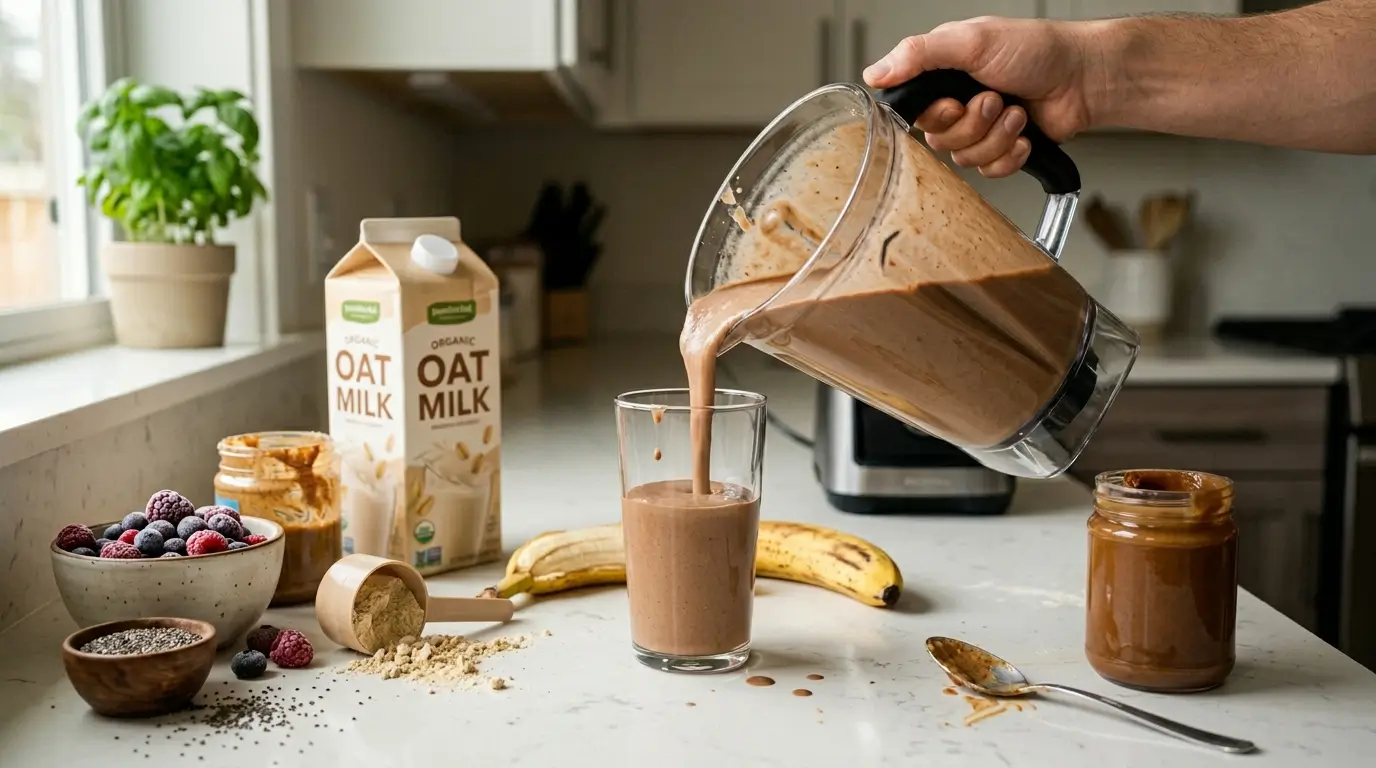
Each recipe uses about 1 scoop (25 g) of plant protein and blends in under a minute. Calorie and protein estimates are approximate and vary by brand.
Recipe 1: Peanut Butter Banana
- 1 banana
- 1 cup oat milk
- 1 tbsp peanut butter
- 1 scoop pea protein (about 25 g)
- Ice
Blend for 30 seconds. About 420 cal, 28 g protein, 48 g carbs, 14 g fat. Best for breakfast or post-workout.
Recipe 2: Chocolate Cocoa
- 1 cup unsweetened almond milk
- 1 scoop chocolate plant protein
- 1 tbsp cocoa powder
- 1 tsp maple syrup (optional)
- Ice
Blend until smooth. About 180 cal, 22 g protein, 10 g carbs, 4 g fat. Low calorie, satisfying as a sweet-craving fix.
Recipe 3: Protein Cold Brew
- 1 cup cold brew coffee
- 1/2 cup oat milk
- 1 scoop vanilla plant protein
- Ice
Shake or blend. About 210 cal, 22 g protein, 18 g carbs, 4 g fat. Caffeine plus protein combo, works well as a mid-morning drink.
Recipe 4: Berry Smoothie
- 1 cup frozen mixed berries
- 1 cup soy milk
- 1 scoop unflavored or vanilla plant protein
- 1 tbsp chia seeds
Blend until thick. About 320 cal, 30 g protein, 35 g carbs, 6 g fat. Antioxidants plus recovery protein.
Recipe 5: Everyday Vanilla
- 1 cup oat milk
- 1 scoop vanilla pea protein
- 1/2 banana
- Ice
Blend. About 280 cal, 24 g protein, 32 g carbs, 6 g fat. Simple daily shake, works for any time of day.
How Much Protein You Actually Need
For context on these recipes, general daily protein targets are:
- Sedentary adult: 0.36 g per lb bodyweight
- Active or weight management: 0.6 to 0.8 g per lb
- Muscle gain or training cut: 0.8 to 1.0 g per lb
A 150 lb active adult aiming for 0.8 g per lb needs 120 g of protein per day. One or two of the shakes above covers 20 to 30% of that. The rest comes from whole food sources like tofu, tempeh, lentils, and legumes.
For your personal daily target, use the DrinkDigits Macro Calculator. For a full breakdown of where vegans can get protein, see our high-quality protein sources guide.
Summary
A vegan protein shake works as well as a whey-based one when the plant protein is chosen well. Soy isolate and pea plus rice blends are the top picks. For RTD shakes, read the ingredient list rather than trusting front-label claims. For café orders, soy milk is the most practical vegan protein source. For home shakes, a blender plus any of the five recipes above delivers 20 to 30 g of protein in under five minutes.
Sources & References
- FAO: Dietary Protein Quality Evaluation (DIAAS report, 2013). DIAAS scores for soy, pea, rice, and hemp protein.
- Pinckaers PJM et al., Sports Medicine (2021). Plant versus animal protein for muscle protein synthesis.
- NIH Office of Dietary Supplements: Protein. Daily protein recommendations.
- USDA FoodData Central. Reference nutrient data for plant protein powders and plant milks.
- International Society of Sports Nutrition: Protein Position Stand. Protein guidance for active adults.