Plant-based living keeps growing in the United States, and most people who follow a vegan diet do not want to give up their daily coffee run or afternoon smoothie. The good news: almost any drink at a U.S. café can be made vegan with three simple changes. Once you know the universal system, you can walk into Starbucks, Dunkin, Peet's, or any local coffee shop and order confidently without asking the barista 20 questions.
We cover the three-step framework, a complete plant milk comparison, the specific hidden dairy traps to avoid, exact ordering scripts that work at the counter, and how to handle protein drinks and home recipes.
The Universal Three-Step Framework
Every vegan drink customization comes down to the same three moves.
1. Swap dairy milk for plant milk. Most cafés now carry at least oat, almond, and soy. Some carry coconut and macadamia too.
2. Remove hidden dairy add-ons. Whipped cream, cold foam, chai concentrate, mocha sauces, caramel drizzle, and some syrups contain dairy even when the drink itself looks plant-based.
3. Use dairy-free syrups for flavor. Most simple flavor syrups (vanilla, hazelnut, toffee nut, sugar-free vanilla) are vegan. The creamy sauces and swirls often are not.
These three steps work at every café chain. The specific dairy traps change (Starbucks has sauce-vs-syrup, Dunkin has swirl-vs-shot), but the framework is identical.
Plant Milk Comparison
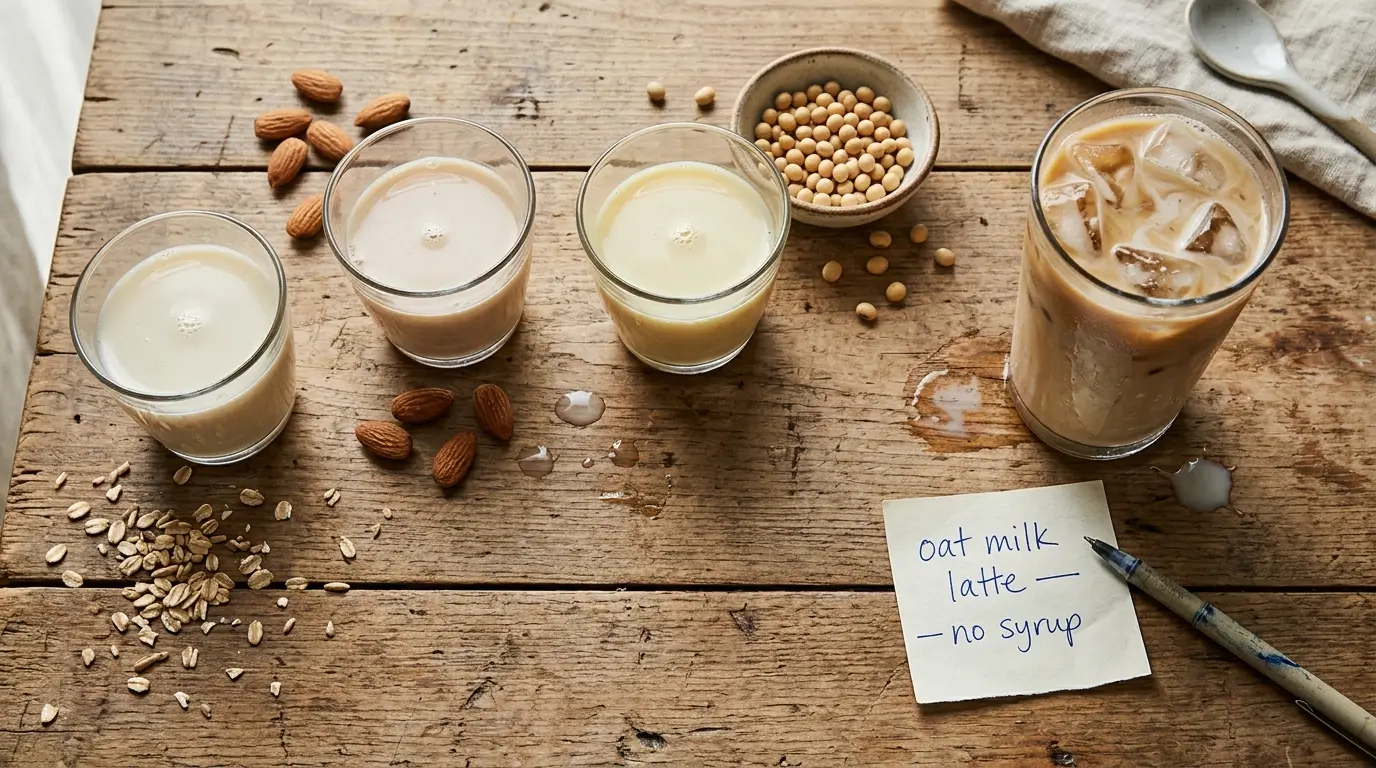
Here is how the most common café plant milks compare per 8 oz, based on typical formulations in the U.S.:
| Milk | Calories | Protein | Sugar | Notes |
|---|---|---|---|---|
| Oat milk | ~120 | 3 g | 7 g | Creamiest texture, closest to dairy |
| Almond milk (unsweetened) | ~30 | 1 g | 0 g | Lowest calorie, lightest taste |
| Soy milk | ~110 | 8 g | 7 g | Highest protein, most dairy-like amino profile |
| Coconut milk | ~70 | 1 g | 4 g | Tropical note, good in matcha and iced drinks |
| Macadamia milk (where available) | ~50 | 1 g | 0 g | Nutty, rich, low-calorie |
Swipe to see more →
Pick based on your goal. For the most protein, soy wins. For lowest calories, almond. For the best mouthfeel in lattes, oat. For deeper side-by-side coverage of milk choices at specific chains, see our best Starbucks milk options guide and Dunkin milk options guide.
Hidden Dairy Traps to Watch For
These ingredients look harmless but contain dairy. Knowing the list saves you from accidental non-vegan orders.
At Starbucks specifically:
- White mocha sauce (dairy-based)
- Pistachio sauce (dairy-based)
- Pumpkin sauce (seasonal, dairy-based)
- Dark caramel sauce and caramel drizzle (dairy)
- Chai concentrate (contains a condensed milk mixture)
- Sweet cream cold foam, chocolate cream cold foam, pumpkin cream cold foam (all dairy)
- Whipped cream
At Dunkin specifically:
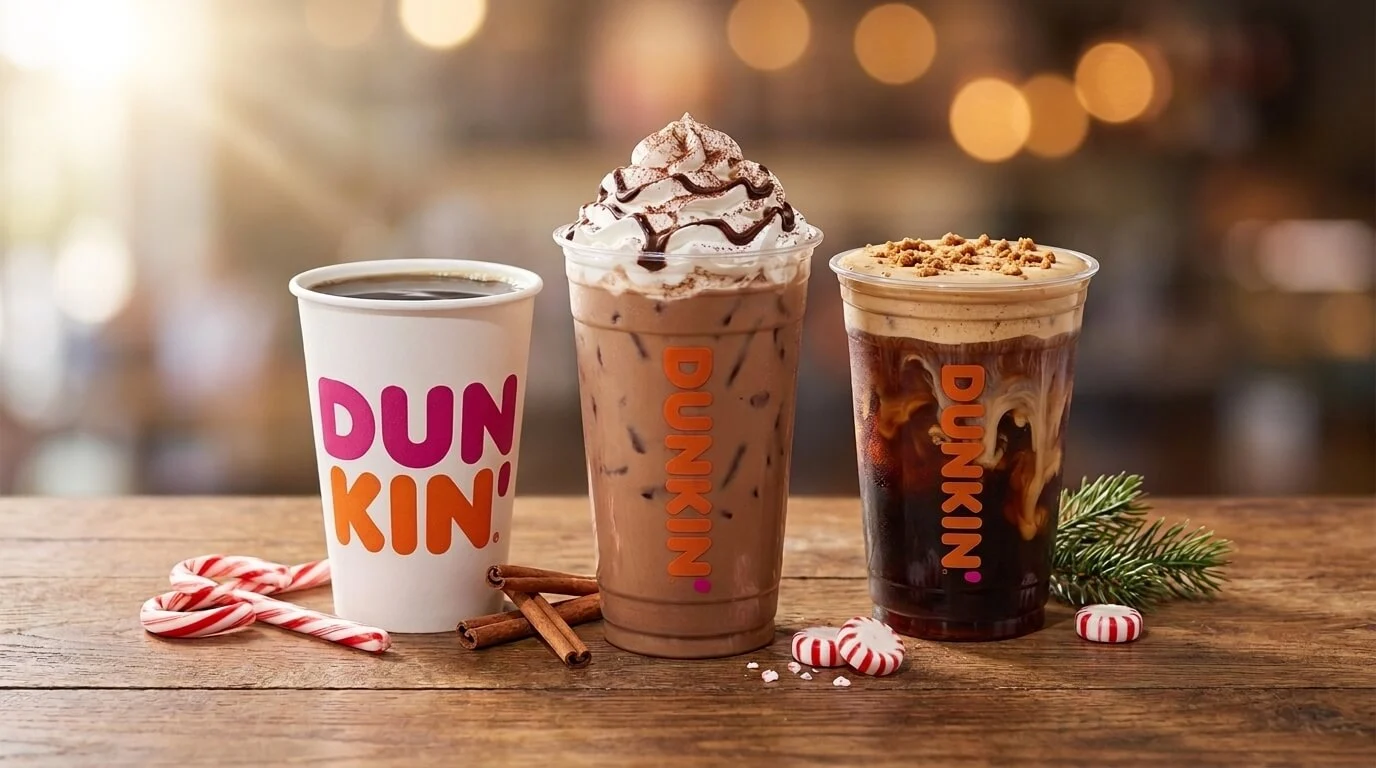
- Flavor swirls (caramel, mocha, French vanilla, hazelnut swirl, pumpkin, butter pecan) all contain dairy
- Flavor shots (vanilla, hazelnut, blueberry, toasted almond, coconut, raspberry) do NOT contain dairy
- Whipped cream, sweet cream toppings
- Butter-based and cream-based sauces on food items
Everywhere:
- Milk chocolate syrups and drizzles
- Butter-based caramel toppings
- Pre-blended Frappuccino-style bases in some chains
For Starbucks-specific customization beyond this list, see can I order vegan drinks at Starbucks. For the Dunkin shots-vs-swirls rule in detail, see can I order vegan drinks at Dunkin and the Dunkin flavor shots vs swirls breakdown.
Café Ordering, Step by Step
Step 1: Pick the base drink
Safest vegan bases at almost any café: cold brew, iced coffee, Americano, hot coffee, espresso shots, and plain tea. These are dairy-free by default.
Step 2: Ask for plant milk
Say the type explicitly: "with oat milk," "with soy milk," "with unsweetened almond milk." Do not say "with milk," because the default is dairy.
Step 3: Remove dairy defaults
If the drink normally includes whipped cream, sweet cream foam, or a dairy sauce, ask to remove it. Be specific: "no whipped cream, no sweet cream cold foam."
Step 4: Pick vegan-friendly flavor
Most classic syrups (vanilla, hazelnut, sugar-free vanilla) are vegan. Avoid anything described as a sauce, drizzle, or swirl.
Step 5: Add protein if you want it
At Dunkin, you can ask for Protein Milk (new in 2026) on any drink, though note that Protein Milk is dairy-based and not vegan. At Starbucks, soy milk adds about 8 g of protein per 8 oz. Or you can add your own plant protein powder at home.
Ordering Scripts That Work
Use these word for word.
"A Grande iced latte with oat milk, no whipped cream, vanilla syrup."
"A medium iced coffee with oat milk, vanilla shot, no classic syrup."
"A Grande Pink Drink, no changes." (Already vegan by default.)
"A Grande iced coffee with soy milk and two pumps sugar-free vanilla."
"A medium cold brew with a splash of almond milk."
Each of these lands at a café and gets you a fully vegan drink with no barista confusion.
Healthy Add-Ons
Once the drink is vegan, you can turn it into a more nutritious option with a few boosters. This is most relevant for smoothies and home shakes.
For protein: peanut butter, almond butter, soy milk, plant protein powder.
For fiber and satiety: chia seeds, flax seeds, oats, banana.
For antioxidants: frozen berries, unsweetened cocoa powder.
None of these require special equipment. A blender and a scale cover everything.
Starbucks and Dunkin, Quick Callouts
Most of your café orders probably happen at one of these two chains. The framework above works at both, but each has its own quirks.
Starbucks. Most classic flavor syrups are vegan. The traps are the sauces (white mocha, pistachio, pumpkin) and all cold foams. The 2026 Iced Mango Cream, Dubai Chocolate, and other viral launches contain dairy by default. Full customization playbook in our vegan Starbucks guide.
Dunkin. The rule is simpler: flavor shots are vegan, flavor swirls are not. Protein Milk (new in 2026) is dairy-based. Full breakdown in our vegan Dunkin guide.
Making Vegan Protein Drinks
Vegan protein drinks use the same framework with one extra step: replace whey or casein with plant protein (pea, soy, rice, or a blend). For drinks specifically built around protein, see our dedicated how to make a protein shake vegan guide for recipes and RTD buying advice. For comparing plant proteins to whey for muscle building, see plant protein vs whey.
Quick Summary
The three questions to ask every time you customize a drink: what milk is in it, what sauce or syrup is in it, and what toppings come on it. Swap dairy milk for oat, soy, or almond. Skip anything described as cream, sauce, swirl, or drizzle unless you have confirmed it is dairy-free. Pick classic syrups for flavor.
Once you internalize that framework, every café in the U.S. becomes navigable, no matter what new seasonal drink they launch next.
Sources & References
- Academy of Nutrition and Dietetics: Plant-Based Diets. Registered dietitian guidance on plant-based nutrition.
- USDA FoodData Central. Reference nutrient data for oat, almond, soy, coconut, and macadamia milk.
- Harvard T.H. Chan School of Public Health: Plant-Based Milks. Evidence-based overview of plant milk choices.
- Starbucks Nutrition by the Cup. Official Starbucks menu and ingredient reference.
- Dunkin' Nutrition Information. Official Dunkin menu and allergen details.