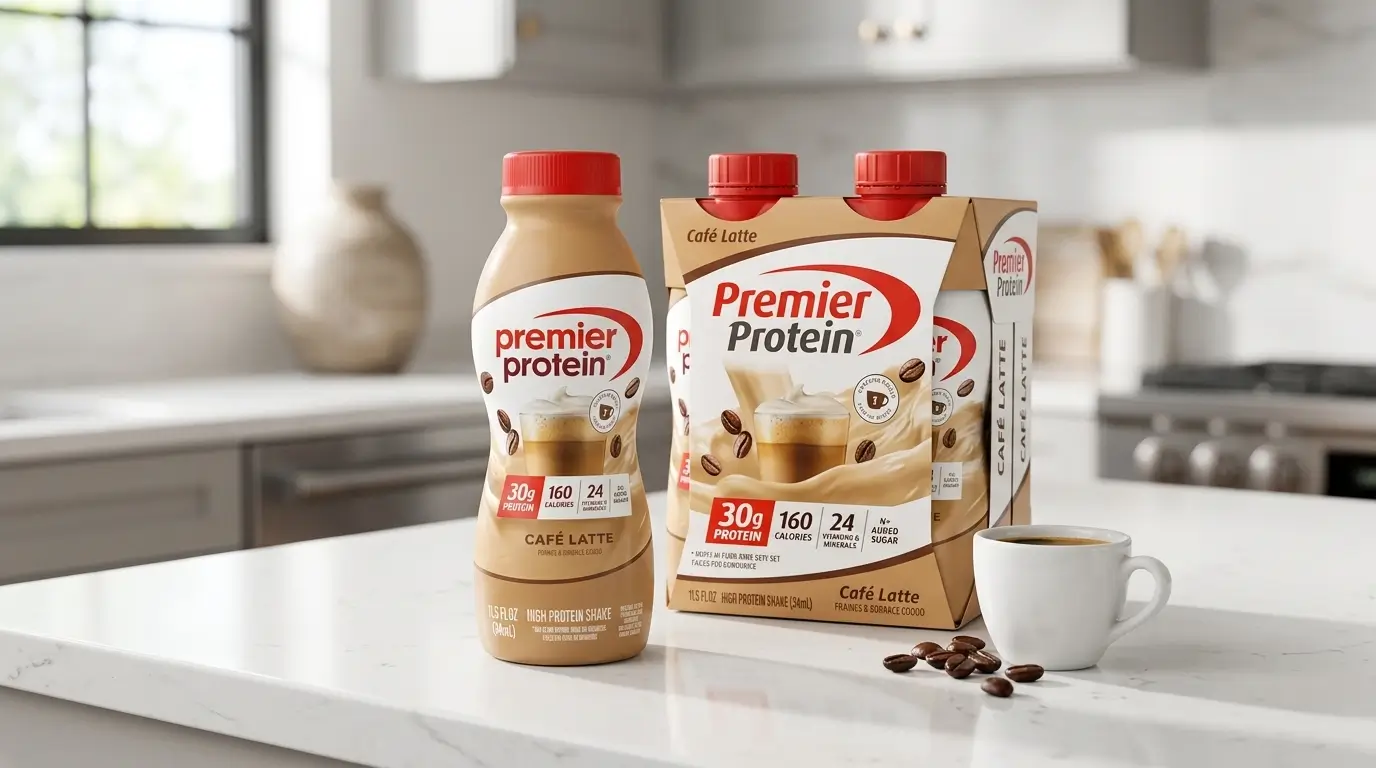
Premier Protein Cafe Latte Shake Nutrition Facts
Per 1 bottle of Premier Protein Cafe Latte Shake (11 fl oz / 325 ml):
Macros and key nutrients:
← Swipe to see more →
Full vitamin and mineral panel (per bottle, % Daily Value):
← Swipe to see more →
That is a 24-nutrient fortification blend, which is unusually comprehensive for a shelf-stable RTD shake. Most cafe drinks (Starbucks Iced Latte, Dunkin Iced Coffee) deliver essentially zero vitamin/mineral fortification beyond the calcium that comes naturally from milk. Premier Protein doubles as a partial multivitamin in addition to its protein and caffeine delivery.
30g of protein for 160 calories is one of the best protein-to-calorie ratios in any mainstream RTD shake.
Caffeine comes from a combination of coffee extract AND added pure caffeine (both listed on the ingredient label). 120 mg is roughly 1.25 cups of drip coffee at home.
How It Actually Tastes
Rating: 8.4/10
For many buyers the first bottle is a small disappointment if it is built up as a cold iced latte replacement, because it does not quite get there. Reviewers describe the coffee flavor as real but soft. It reads more like a sweetened milky coffee drink than a strong iced espresso. By a few bottles in, most recalibrate expectations and start ranking it against other protein shakes rather than against Starbucks.
On the sweeteners. Sensitive palates can taste sucralose. Not strongly, but it is there in the finish, a sweetness that lingers a beat longer than sugar would. Other drinkers cannot taste it at all. So that one is genuinely personal. If you are someone who picks up artificial sweeteners in Diet Coke or Coke Zero, you will likely pick them up here too.
Texture is the big surprise. It is thick. Closer to a milkshake than an iced coffee. Poured over ice expecting the latte experience, it just sits there. Drunk straight from the bottle, cold, the thickness works. Shake the bottle for a few seconds before opening, because there is some separation in shelf-stable shakes.
When it makes the most sense:
- The 9 AM gym morning. Half before lifting, half after. The 30g protein and 120 mg caffeine in one hand is hard to beat.
- Skipping the Starbucks drive-thru on a busy morning. Costs $1.80 instead of $5.40, and it is faster.
- Mid-afternoon instead of a Frappuccino. 160 cal vs 380 cal.
When it does not:
- Sit-down weekend coffee. With time to make a real pour-over at home or sit at a cafe, this is not the pick. The flavor cannot compete with brewed coffee.
- After 3 PM. 120 mg of caffeine that late can wreck sleep.
Premier Protein Cafe Latte vs Starbucks Iced Latte: The Head-to-Head
This is the comparison everyone runs in their head before buying. Every Starbucks number here is taken from the published nutrition panel for a grande Iced Caffe Latte with 2% milk.
← Swipe to see more →
The protein gap is the headline. Starbucks Iced Latte has 8g of protein, all from the 2% milk. Premier Protein has 30g, the same protein load as a serious gym shake, in a similar-sized bottle and for less than half the price.
The sugar gap is even bigger. Starbucks Iced Latte at 11g is not high (the sugar is lactose from milk, not added syrup) but Premier at 1g is essentially zero. If you switch from Starbucks Iced Vanilla Latte (23g sugar) or Caramel Macchiato (33g) or Mocha Frappuccino (51g), the gap blows out further.
Where Starbucks wins is taste authenticity and caffeine. 150 mg from two real espresso shots vs 120 mg from coffee extract plus added caffeine. The espresso shows up in the cup. The added caffeine does not have a flavor of its own.
The yearly math: A grande Iced Latte five days a week runs roughly $24.75 a week or $1,287 a year. Swapping in Premier at Costco prices is $9 a week or $468 a year. That is an $819 savings, plus 110g more weekly protein and 50g less weekly sugar. The savings alone cover a Costco membership in the first six weeks.
For the wider context on caffeine across cafe drinks, see our Starbucks Refreshers vs Iced Teas guide and the caffeine in 100+ drinks chart.
Premier Protein vs the Rest of the Protein-Coffee Aisle
The protein-coffee aisle has gotten crowded. Fairlife Core Power Coffee, Muscle Milk Coffee House, La Colombe Triple Draft, and Starbucks Doubleshot Energy are the main alternatives buyers cross-shop. Here is how they line up:
← Swipe to see more →
An honest ranking across these options:
- Most protein per dollar: Premier Protein wins it. Roughly 12-15g of protein per dollar at Costco prices, more than any of the others.
- Best taste of the bunch: Reviewers consistently put Fairlife Core Power Coffee closest to a real iced latte. It uses lactose-filtered milk and real coffee, and there is no sucralose or carrageenan in the ingredient list. The catch is the price, which is roughly double Premier per bottle, and the protein is 4g lower.
- Worst pick on the table: Starbucks Doubleshot Energy. 29g of sugar in one can puts it in soda territory, and the 12g of protein is less than half of Premier for more money.
- Most caffeine: La Colombe Triple Draft at 175 mg, but at 6g of protein it is a coffee drink with a token protein boost, not a protein shake.
If you want protein-per-dollar, buy Premier. If you want the cleanest ingredient list, pay up for Fairlife Core Power Coffee. If you want maximum caffeine and the protein is secondary, La Colombe is the pick.
What Keeps Buyers Coming Back
- The macros are real. 30g of protein for 160 calories is among the best ratios in any shelf-stable shake. The 1g of sugar essentially gets the drink off the added-sugar ledger entirely.
- The price at Costco is hard to walk away from. $1.80 a bottle for 30g of protein is genuinely cheap.
- It travels. Shelf-stable, throws into a gym bag or a checked airline bag without issue.
- It is a one-handed breakfast on a rushed morning.
What Makes Buyers Put It Down Some Mornings
- The aftertaste of sucralose when sipping it slowly. Fast chug, no problem. Nursed over an hour at a desk, it is noticeable.
- Carrageenan is on the label. The food-grade form is FDA-safe, but some drinkers report mild GI sensitivity to it and the data is mixed, so they treat it as an "every other day" ingredient.
- It is not brewed coffee. For a real weekend cup, this does not scratch that itch.
- Not for vegans or anyone fully avoiding artificial sweeteners. The milk protein concentrate plus the sucralose are dealbreakers for those audiences.
What Is Actually in the Bottle (Ingredient Research)
Here is the full ingredient list from the Premier Protein label, gone through line by line:
Water, Milk Protein Concentrate, Calcium Caseinate, Cocoa Powder (Processed with Alkali), High Oleic Sunflower Oil (or Soybean Oil), Natural and Artificial Flavors, Contains less than 1% of: Coffee Extract, Caffeine, Inulin, Cellulose Gel, Cellulose Gum, Salt, Tripotassium Phosphate, Dipotassium Phosphate, Sodium Hexametaphosphate, Sucralose, Acesulfame Potassium, Carrageenan, plus a Vitamin and Mineral blend (Magnesium Phosphate, Sodium Ascorbate, Vitamin A Palmitate, Ferric Orthophosphate, Zinc Oxide, Niacinamide, Calcium Pantothenate, Manganese Sulfate, Cupric Sulfate, Vitamin D3, Pyridoxine Hydrochloride, Thiamin Mononitrate, Riboflavin, Chromium Chloride, Folic Acid, Biotin, Potassium Iodide, Phytonadione, Sodium Selenite, Sodium Molybdate, Cyanocobalamin).
The ingredients that matter:
- Milk Protein Concentrate (MPC) is the main protein source. Roughly 80% casein and 20% whey, slow-digesting, good for sustained fullness.
- Calcium Caseinate is the second protein source. Another slow-digesting casein form.
- Coffee Extract plus added Caffeine. This is the surprise on the label. The 120 mg of caffeine in the bottle comes from BOTH a coffee extract AND a separate "Caffeine" listing. Premier Protein does not use brewed coffee. The "Cafe Latte" name describes the flavor, not the brewing method. If you assumed this was a brewed coffee product, that is not what is in the bottle.
- High Oleic Sunflower Oil or Soybean Oil is the fat source. Adds mouthfeel and helps shelf stability.
- Inulin is the soluble fiber. Accounts for the 1g of fiber on the panel.
- Phosphates (tripotassium, dipotassium, sodium hexametaphosphate) are emulsifiers that prevent the protein from separating in a shelf-stable bottle.
- Sucralose is 600x sweeter than sugar. FDA-approved. Some studies suggest GI microbiome effects at high doses; most drinkers report a hint of sweetness in the finish but no GI issue at one bottle a day.
- Acesulfame Potassium is 200x sweeter than sugar. FDA-approved. Used as a flavor-balancing co-sweetener with sucralose.
- Carrageenan is a seaweed-derived thickener. Food-grade carrageenan is FDA and WHO safe, but there is enough preclinical data on intestinal inflammation that some drinkers choose not to have one of these every single day.
If sucralose, acesulfame K, carrageenan, casein, or added caffeine are dealbreakers for you, this is not your shake. If those ingredients are acceptable trade-offs for 30g of protein at $1.80, this is one of the best deals on the shelf.
Where to Buy It and What It Costs
A price check across retailers shows a wide spread per bottle. Here is the snapshot:
← Swipe to see more →
Costco in-store at $1.80 a bottle is the clear winner. Without a Costco membership, Amazon Subscribe and Save at $2.33 is the next-best option, and the subscription can be cancelled after one delivery. Single bottles at convenience stores only make sense in an emergency. The per-bottle convenience-store price wipes out the entire macros-for-cheap argument.
The Other Premier Protein Flavors
Premier Protein has expanded the coffee line beyond Cafe Latte. Here is how the others compare:
- Cafe Latte (120 mg caffeine): the one in this review. The closest to a daily Starbucks replacer.
- Caramel (120 mg caffeine): noticeably sweeter, more dessert-leaning. If you order Caramel Macchiatos at Starbucks, you will probably prefer this over the Cafe Latte.
- Vanilla (no caffeine, 30g protein): the original Premier Protein. Fine if you want a generic protein shake.
- Chocolate (no caffeine): the second-original. Fine but not coffee-related.
- Cookies and Cream / Peaches and Cream / Strawberries and Cream (no caffeine): dessert-leaning, and outside the scope of this coffee-focused review.
Only the Cafe Latte and Caramel have the 120 mg caffeine. The others are zero-caffeine shakes.
How Buyers Actually Use Them
- Morning iced-coffee replacement: drink chilled straight from the bottle. The most common use case.
- Post-lift recovery shake: 30g protein hits the leucine threshold for muscle protein synthesis and the 120 mg of caffeine doubles as a workout finisher.
- Pre-workout: lighter caffeine than a Celsius (200 mg). Enough for a morning lift without overstimulation.
- Travel: shelf-stable bottles go in a checked bag without issue. The 11 oz size is over the TSA 3.4 oz carry-on liquid limit, so checked only.
- Coffee enhancer at home: pour half a bottle into a fresh cup of pour-over to bump the protein and add a milky finish without buying creamer.
Who Should Buy It
You should buy a Costco 18-pack of Premier Protein Cafe Latte if you currently drink a daily Starbucks or Dunkin iced coffee, you want a 30g-protein shelf-stable shake for cheap, you can taste a hint of sucralose without minding it, and you can get to a Costco.
Who Should Skip It
You should skip it if you avoid artificial sweeteners on principle, you are vegan, you have known carrageenan sensitivity or IBS, you want the taste of brewed coffee in a bottle, or you prefer cleaner-ingredient brands like Fairlife Core Power Coffee or OWYN Cold Brew.
Related Reads
- Caffeine in 100+ Drinks: From 0 to 728 mg Ranked (2026 Chart)
- Espresso vs Coffee 2026: Which Is Stronger?
- Protein Coffee vs Protein Shake
- Matcha Showdown 2026: Starbucks vs Dunkin vs DIY
- Casein Before Bed: Does Slow-Release Protein Work?
- How to Calculate Daily Protein Intake
Sources & References
- Premier Protein Cafe Latte Product Page. Official nutrition panel and ingredients list.
- BellRing Brands 2024 Annual Report. Premier Protein revenue and market position.
- USDA FoodData Central, Milk Protein Concentrate. Reference protein content and amino acid profile.
- FDA: High-Intensity Sweeteners. Sucralose and acesulfame K approval data.
- Borthakur et al. 2017, Carrageenan and Inflammation Review (PMC5379808). Carrageenan and intestinal inflammation literature.
- American Heart Association: Added Sugars Recommendations. 25g/day women, 36g/day men reference.
- International Society of Sports Nutrition Position Stand on Protein. 1.4-2.0 g/kg/day protein for active adults.
- Caffeine Informer Database. Caffeine content reference for protein shakes and coffee drinks.