David Protein Bar Peanut Butter Nutrition Facts (Per Bar)
← Swipe to see more →
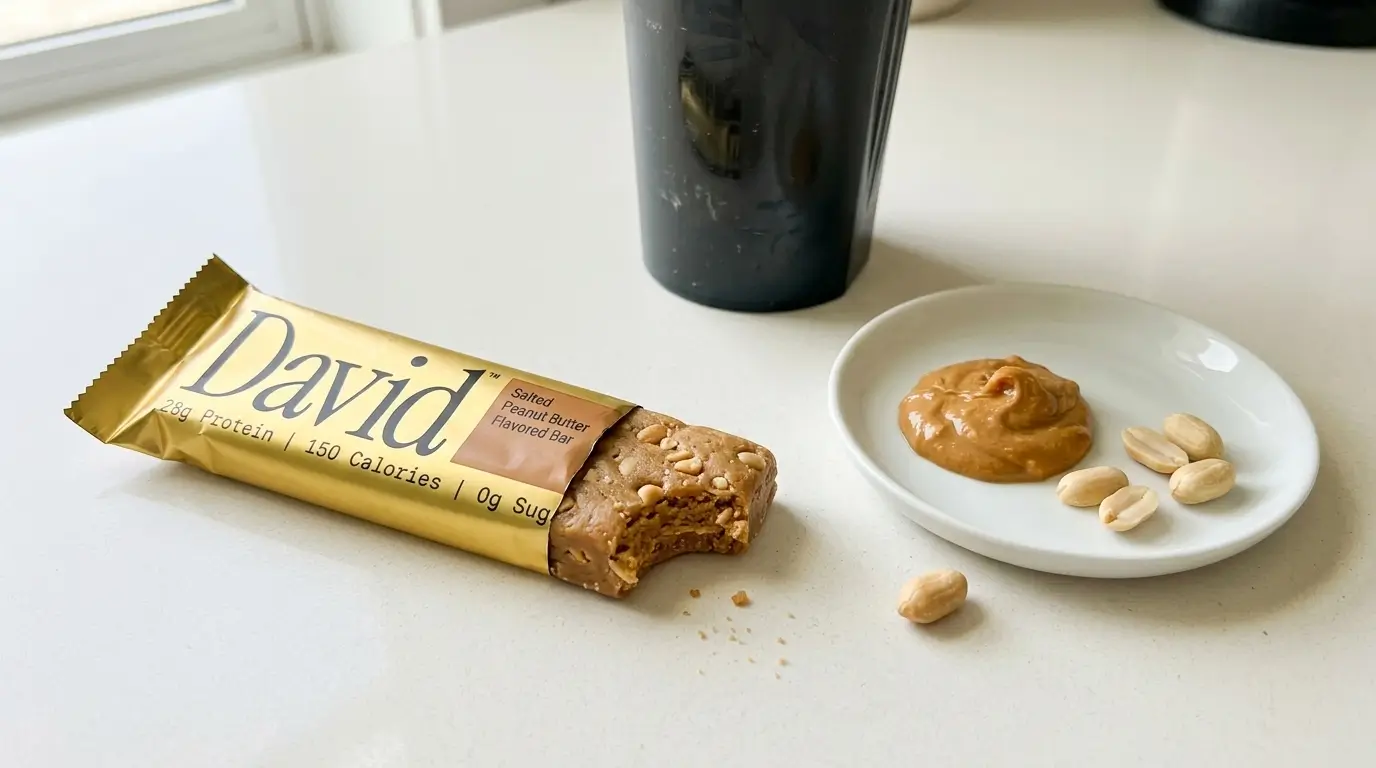
Protein density: 28g per 150 calories, roughly 0.187g protein per calorie. Top of the category.
Sugar: 0g real sugar. Allulose adds sweetness with minimal glycemic impact.
Fat: 4g, unusually low for a peanut butter bar. The EPG fat replacer is what makes this work.
David Protein Bar Peanut Butter Review
Flavor
The most common praise in buyer reviews is the absence of the artificial-sweetener bite, the lingering chemical aftertaste many associate with sucralose, maltitol, or stevia. Reviewers describe the peanut butter as tasting like roasted peanuts and salt, with sweetness pulled well back. In a category that usually leans aggressively sweet, David reads as restrained, which is a deliberate positioning choice rather than a flaw.
Texture
Consistently described as dense, closer to a firm peanut butter cookie than a Snickers-style bar. It holds together without crumbling and sits slightly dry in the mouth, so it pairs best with coffee or water. This is typical of high-protein, low-fat bars: the 4g of fat (unusually low for a peanut butter bar) is what trades away some of the softness.
Sweetness Level
Low. Allulose carries roughly 70% of sugar's sweetness without the calories or glycemic impact, and there is no maltitol or sugar-alcohol bite reported even after repeated servings.
Best Time to Eat
- Post-workout (within 2 hours)
- High-protein cutting phase
- Mid-afternoon hunger gap
- As a fourth meal-replacement protein hit on a 4×30g daily distribution
What Regular Use Looks Like
A few patterns show up across regular-use reports and the bar's own macros:
- Flavor holds up: the restrained peanut flavor avoids the flavor fatigue very sweet bars cause, so it tends to stay palatable as a daily item
- Satiety beats the calorie count: 28g of protein in 150 calories drives fullness for 2 to 3 hours, more than a typical 150-calorie snack
- Allulose tolerance is dose-dependent: one bar contains roughly 14g of allulose, which most people tolerate without GI issues. Reports of bloating cluster around higher daily doses (stacking multiple bars), so spacing them out matters
- The value question: the per-bar price stings, but cost per gram of protein (
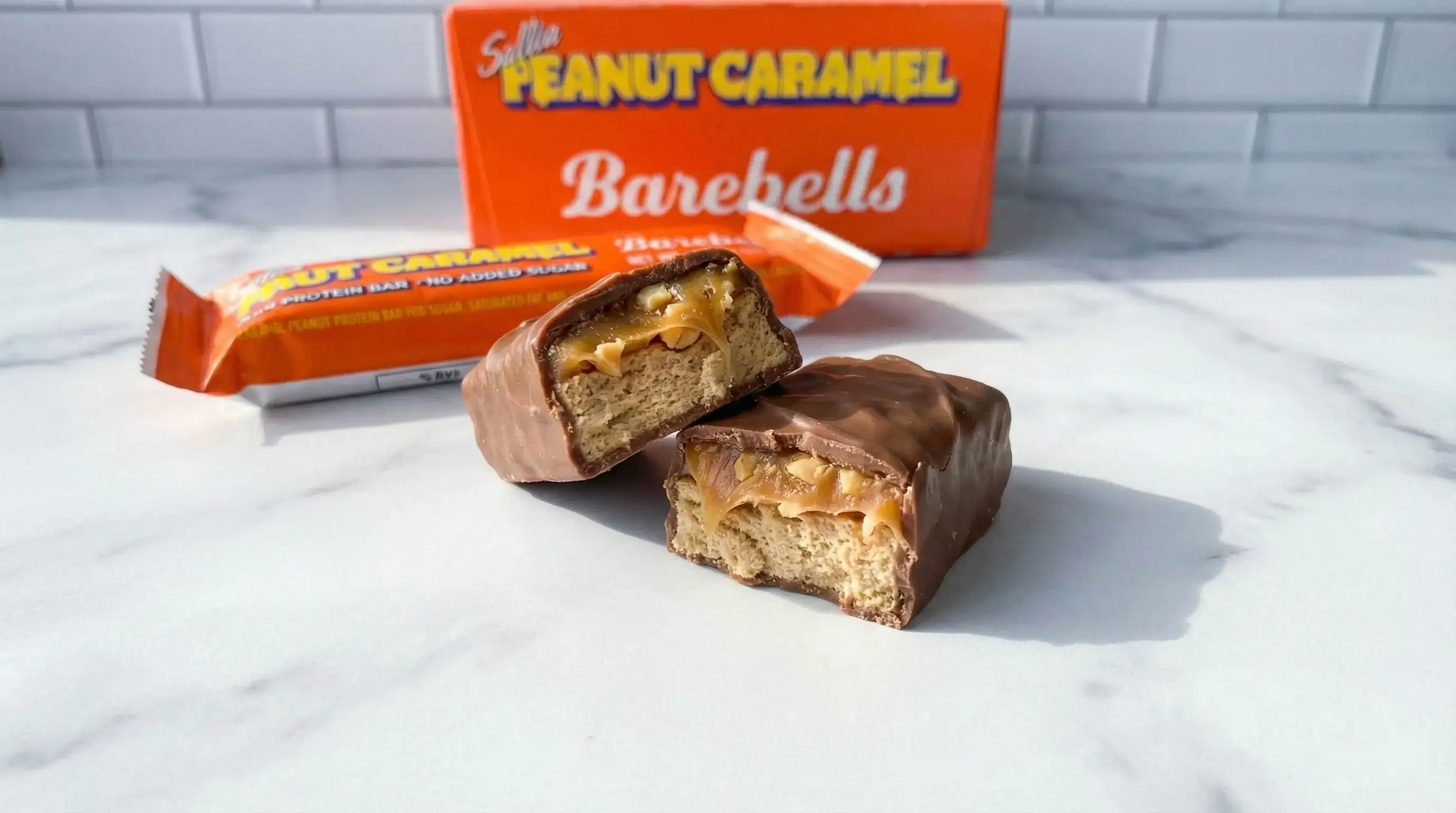
$0.116/g) is competitive with Barebells ($0.16/g), so for protein-target buyers the math holds up
EPG and Allulose: What Actually Makes This Bar Possible
The 28g protein in 150 calories is not achievable with traditional food science. Two ingredients enable it:
EPG (Esterified Propoxylated Glycerol) is a fat-like molecule that delivers fat texture and mouthfeel without the calories. EPG passes through the digestive system largely unabsorbed, contributing roughly 0.7 calories per gram instead of fat's 9. It received FDA GRAS status in 2021 and has been used in food products since.
Allulose is a rare sugar found naturally in figs and raisins. It tastes about 70% as sweet as sucrose, has minimal glycemic impact, and is exempt from the "added sugars" line on US nutrition labels per FDA ruling in 2019.
The combination lets David hit a macro profile that was impossible 5 years ago. For full background on protein quality scoring of bars like this, see protein quality score explained.
Flavor Accuracy, Texture, Nutrition, Taste & Value
Flavor Accuracy: Reads as authentic roasted peanut butter
Texture: Dense, slightly chewy, cookie-like
Nutrition: Top protein per calorie in this category
Taste: Restrained sweetness, balanced salt
Value: Premium pricing justified by macro profile
Buy This Bar If:
- You're cutting and need protein density on a tight calorie budget
- You hit your daily protein target through a per-meal distribution strategy
- You dislike the sugar-alcohol aftertaste of Quest, Barebells, or ONE bars
- You're insulin-sensitive or pre-diabetic and avoiding glycemic spikes
Skip This Bar If:
- You want a candy-style sweet bar (try Barebells or Quest instead)
- You have known sensitivity to allulose or EPG
- Your bar budget is under $2.50 per bar
- You prefer whole-food, minimal-ingredient bars (try Zing Bars)
How David Compares to Existing High-Protein Bars
David sits at the top of a small group of bars hitting 25g+ protein:
- David Peanut Butter: 28g protein, 150 cal, 0g sugar, best ratio
- Barebells Soft Bar: 15g protein, 200 cal, 2g sugar (maltitol-sweetened), see our Barebells review
- Quest Bar (avg): 20g protein, 190 cal, 1g sugar, established, lower protein per cal
- Built Bar: 17-19g protein, 130-180 cal, closest competitor on protein density
- ONE Bar: 20g protein, 220 cal, 1g sugar, heavier on calories
Per dollar, David is more expensive but per gram of protein it's competitive: roughly $0.116 per gram of protein vs Barebells at ~$0.16 per gram.
Who Gets the Most Value From David
The ideal David buyer is someone running a per-meal protein distribution strategy who needs a fourth protein anchor that isn't a shake. It also fits cutting phases (where every calorie matters), keto-adjacent diets (the 0g sugar matters), and anyone with sugar-alcohol GI sensitivity. It is overkill for casual snackers who just want something tastier than a granola bar.
Related Reads
- How to Hit 30g Protein Without a Shake
- Best Macro Ratios for Muscle Gain
- Common Macro Tracking Mistakes
- Protein Quality Score Explained