Quest Thin Crust Pizza (Uncured Pepperoni) Nutrition Facts
Per serving (1/2 pizza): 28g protein, 350 calories, ~945mg sodium, 19g fiber, ~6-7g net carbs. This is the standard label serving and the figure most databases quote.
Whole pizza: 56g protein, 700 calories, 1890mg sodium, 38g fiber. The full table below is per whole pizza.
← Swipe to see more →
Protein: 56g per whole pizza, roughly 2-3x typical frozen pizza.
Carbs: 50g total with 38g fiber, leaving 12g net carbs vs 70-90g for traditional frozen pizza.
Sodium: 1890mg per pizza, high. Track this if you're sodium-restricted.
Quest Frozen Pizza Pepperoni Review
Flavor
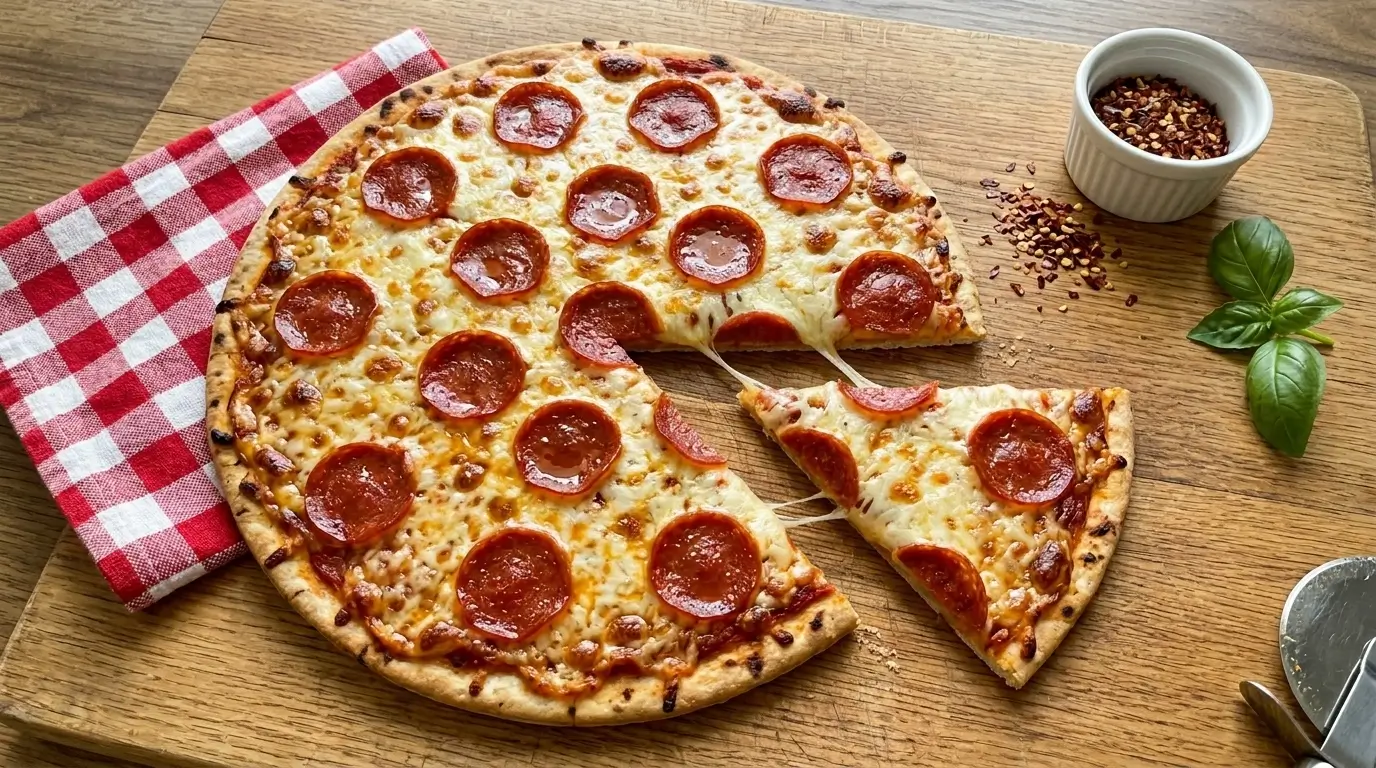
Most 'high-protein' frozen pizzas use turkey pepperoni or sad reduced-fat cheese that telegraphs 'diet food' from the first bite. Buyers report Quest does not do that. The pepperoni is real pepperoni, proper pork, proper spice, edges that crisp up and curl in the oven. The mozzarella melts and pulls properly. The sauce is restrained, not the sugar-bomb tomato that some frozen pizzas hide behind. Reviewers consistently describe genuinely enjoying it rather than tolerating it as diet food.
Texture
The crust is the part buyers tend to worry about, and reviewers generally report it turns out fine. Not identical to flour dough, it's crispier all the way through, less of the chewy interior you get from real bread, but the texture is closer to a thin-crust pizza than a cracker. Slices hold weight without flopping, and the crust softens slightly but stays intact after a few minutes on the board. Buyers note that baking it a couple of minutes longer than the box says yields an even better crust char.
Sweetness Level
Low. No sugar-bomb tomato sauce. Real Italian-style seasoning. Buyers note a pinch of red pepper flakes takes it up a level for those who like more heat.
Best Time to Eat
- High-protein dinner
- Post-workout meal (56g protein hits MPS targets)
- Athlete portion: whole pizza
- Casual portion: half pizza, save the rest for next day
What Regular Use Looks Like
Buyer reports and the macros point to a consistent picture of how this fits into a routine:
- Whole pizza solo: 700 calories and 56g protein is a substantial meal. Reviewers describe staying full for hours, which is unusual for frozen pizza
- Split between two: 350 calories and 28g protein each, which buyers treat as a reasonable post-workout meal rather than a calorie disaster
- The crust: buyers who expect to compromise often report being pleasantly surprised, with many preferring it to DiGiorno for a quick high-protein meal
- Sodium reality: 1890mg per pizza is significant on the label, and sodium-sensitive buyers report noticing it. Drinking extra water around the meal helps
- Where it fits: the macros favor sizing it down to half a pizza as a high-protein meal anchor, with buyers treating it as a regular substitute for standard frozen pizza
Why the Milk Protein Crust Matters
Traditional pizza crust is flour-based: 30-50g of carbs and 8-12g of protein per medium pie. Quest replaces the flour with milk protein concentrate (a casein-whey blend), which delivers:
- More protein per calorie (the crust alone provides 25g+ of the pizza's 56g protein)
- Lower net carbs (50g total minus 38g fiber = 12g net vs 70-90g for traditional)
- Higher fiber (38g from added soluble corn fiber and inulin)
- Gluten-free profile (no wheat flour)
The tradeoff is texture and price. The crust doesn't have the chewy stretch of fresh pizza dough, it's denser and crispier. And at $8 for a personal pizza, you're paying about double a comparable frozen DiGiorno.
For more on milk protein and casein/whey blends, see our Fairlife Core Power Elite review which uses similar protein blending.
Sodium Reality Check
The 1890mg sodium per pizza is genuinely high, about 83% of the AHA daily recommendation (2300mg) for sedentary adults. For active adults or heavy sweaters this is fine within a daily total of 3000-7000mg, but for sodium-sensitive consumers (high blood pressure, kidney concerns) it's a meaningful chunk.
Mitigation strategies:
- Eat the pizza with low-sodium foods the rest of the day
- Skip adding extra cheese or salt
- Drink extra water around the meal
For full daily sodium guidance, see our electrolyte drinks compared post.
Flavor Accuracy, Texture, Nutrition, Taste & Value
Flavor Accuracy: Genuine pizza flavor profile
Texture: Crispy crust with light chew
Nutrition: Outstanding protein, moderate sodium concern
Taste: Better than expected for protein-engineered food
Value: Premium price justified by macro profile
Buy This Pizza If:
- You want a high-protein dinner without cooking
- You're cutting and need a 56g protein meal in 700 calories (or 28g per 350-cal half)
- You're gluten-sensitive and want pizza
- You'd rather pay $8 once than make a complicated meal
Skip This Pizza If:
- You're sodium-restricted (1890mg per pizza is significant)
- You want authentic Italian-style pizza dough
- Your budget is under $5 per pizza
- You prefer larger pizza diameters (Quest is personal-size)
How Quest Pizza Compares
← Swipe to see more →
Quest has roughly 3x the protein of typical frozen pizza at similar or fewer calories. The cost per gram of protein is competitive when you account for what you're getting macro-wise.
Who Gets the Most Value
Athletes during cutting phases who want pizza without sacrificing macro targets. Anyone running a per-meal protein distribution (4×40g or higher) who needs a fast meal anchor. Gluten-sensitive consumers who can't eat traditional pizza. Casual macro trackers who'd otherwise skip pizza entirely.
Related Reads
- How to Hit 30g Protein Without a Shake
- Best Macro Ratios for Muscle Gain
- Cutting vs Bulking Macros
- Common Macro Tracking Mistakes